

Blog / Madison Toyota Service

Blog

All Madison Toyota Service Toyota Vehicles Exploring Madison Around Town Madison Toyota Dealer Driving Safety Car Maintenance Hybrid Vehicles Community Toyota Car Care Tips Smart Toyota Service Smart Toyota News Toyota Safety Toyota Corolla Toyota Highlander Toyota Prius Charity Support Toyota Camry Toyota Sienna Madison Used Cars Toyota RAV4 Smart Motors Certified Used Vehicles Smart Toyota New Inventory Green Energy Smart Motors Used Cars Smart Motors Used Vehicles Toyota Supra Toyota Tundra Toyota Yaris Auto Body Repair Auto Body Shop Ball Body Shop Local Festivals Smart Buys Cars Smart Toyota Auto Parts Toyota Tacoma Employment Toyota 4Runner Toyota Avalon Toyota bZ4X Toyota C-HR Toyota Corolla Cross Toyota Land Cruiser Toyota Sequoia Toyota TRD Vehicle Acquisition Vehicle Buying

Driving in Heavy Rain is No Splashing Matter

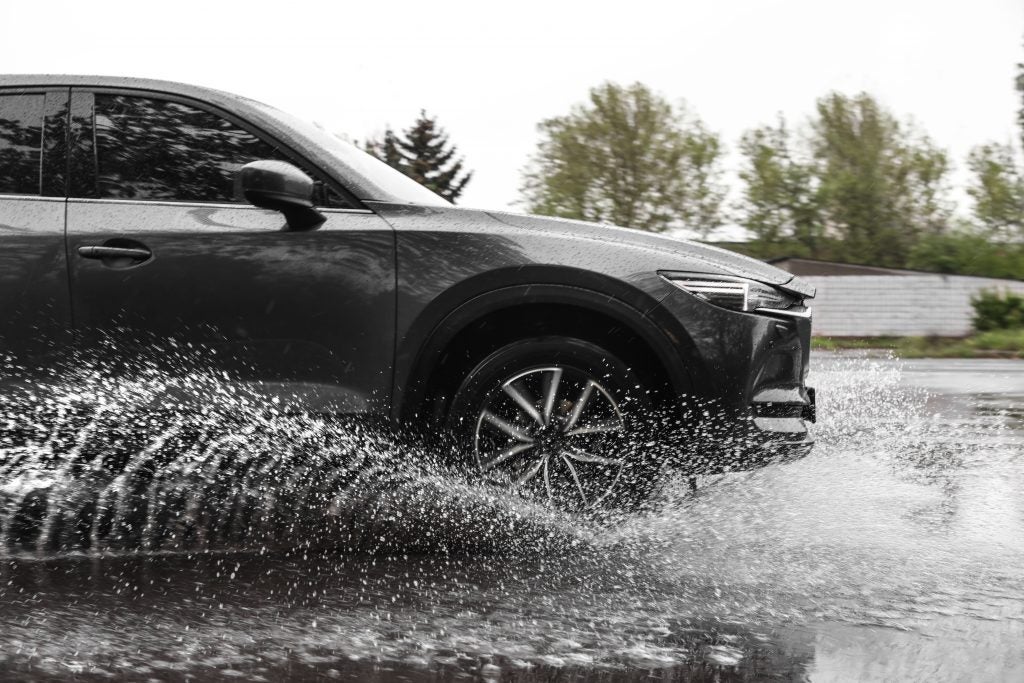
Imagine, you’re driving along on an overcast summer day. You’re minding your speed, traffic is light, and there doesn’t seem to anything particular to be concerned about. You’re driving along on an overcast summer day. You’re minding your speed, traffic is light, and there doesn’t seem to anything particular to be concerned about. Suddenly it begins to rain. You know the drill: turn on your windshield wipers, make sure your headlights are on, and tap the brakes to cancel the cruise control. These are all common sense actions all drivers should take even while driving in a light rain. The rain starts coming down harder and harder but visibility is still pretty good so you’re not concerned. But then you experience a very odd sensation. Your vehicle seems to be floating above the road. It seems to have a mind of its own. You might as well make suggestions to your car as to how to stay on the road as you’re now powerless over the steering. You know what’s happening. It’s happened before. You’re hydroplaning. And hydroplaning can be just as dangerous as sliding across a frozen highway. What is Hydroplaning? Hydroplaning usually occurs within the first 10 minutes of a rainstorm when oils, dirt and debris begin to wash off the surface of the road. It also happens when there is too much water for the tread of your tires to scatter, so your vehicle is literally lifted above the surface of the water. What to Do if You're Hydroplaning While Driving Take your foot off the accelerator, don’t brake, and wait for your tires to slow down to a point where they can handle dispersing the water. Continue on at this slower speed until the storm lets up. How Can I Prevent Hydroplaning When It's Raining? “Having quality tires with the proper amount of tread is one of the best things a driver can do to prevent hydroplaning,” says Jake Schaefer service director at Smart Motors. “A lot of people wait until winter is approaching to change their balding tires, but we recommend you change your tires at 4/32” remaining tread, regardless of the time of year, so that you don’t experience a lag in wet weather performance.” 100 Year Flood The 100-Year Flood in Madison, WI Hydroplaning is just one of the dangers of driving in heavy rains, as many Wisconsinites might have learned in 2018 when we experienced the “100-year flood” in which up to 20 inches of water was collected in certain areas. At Smart Motors in Madison, well over 100 flood damaged vehicles were towed in after the waters subsided to a navigable degree. Owners were hoping against hope their cars and trucks could be repaired. Can Driving in the Rain Damage Your Car? “Time and time again, we had to break the news to people that their car or truck was totaled,” says Jake Schaefer. “In fact, the totaled vehicles far outnumbered the ones that could be repaired.” Schaefer says the majority of the totaled vehicles experienced water getting into the engine, which can cause irreversible damage. Schaefer says that unfortunately, there is no water-depth rule. He says that one need not drive through a 12” puddle to cause damage. Even in shallow water, all it takes is just the right splash to find its way into the engine and ruin the vehicle. Driving in Heavy Rain: Safety Tips Preventing water damage can be tricky and certainly not foolproof, but Schaefer says there are some measures drivers should take if there is a threat of flooding. “First of all,” he says, “If you don’t absolutely have to drive in flood-like conditions, don’t!” Also, remember the National Weather Service trademark phrase; “Turn Around. Don’t Drown.” If there are flood warnings, the first consideration for a driver is to move the vehicle to a higher ground if that is an option. If this is not an option, Schafer says to leave the vehicle where it is. If you are on the road during flood conditions, exercise extreme caution and a use a lot of common sense. Schaefer says if you can’t see the road because there’s so much standing water, don’t risk driving through it. “You can’t determine water depth without going in,” he says. “My suggestion is to pull over safely and observe other vehicles that may brave their way through the flooding.” Schaefer also warns that during a flood, there may no longer be any roadway under the water and you could drive into an impromptu river. If the water is over 12" in depth, it could sweep a car away. Schafer offers these additional helpful hints for driving in heavy rain conditions: • If at all possible, wait to embark on your trip until the weather improves. • Check your tires periodically and replace them if the tread is worn to a dangerously low level. • Slow down. • Do not use cruise control. • Turn on your headlights. In some cases you might even want to turn on your hazards. • Definitely use your windshield wipers. Replace them if they are damaged or worn. • Maintain a safe distance from other vehicles. • Avoid heavy or sudden braking. • As mentioned above, be wary of standing water. • If you’re hydroplaning, step off the gas and try not to brake. • Ventilate your vehicle to prevent windows from fogging up.

Certified Collision Repair. Why it Matters

The standard of quality you expect. It is never easy when you’re involved in an accident, and the last thing you want to worry about is if the body shop you choose to repair your vehicle will do a quality job. How can you ensure not only the quality of collision repair, but be assure the equipment, parts and technicians working on your vehicle are qualified professionals?  Simple. Certification. As a Toyota Certified Collision Center, Ball Body Shop – a division of Smart Motors, takes the risk out of collision repair through the rigorous Toyota certification process and on-going continuing education, equipment specifications, parts requirements, and continuous customer experience monitoring. Ball Body Shop | 2225 Eagle Drive, Middleton, WI | 608.831.5944 “It’s our commitment to excellence in collision repair professionalism, repair quality and customer satisfaction”, says Ball Body Shop manager James Anderberg. “Our staff is uniquely qualified to get the job done right, while at the same time, putting our customers at ease during what can be a stressful time for them.” Benefits of choosing a Toyota Certified Collision Center for your vehicle’s repairs are abundant and include: - Toyota Certified Technicians. - Toyota Certified Management team provides the knowledge and expertise to answer your question quickly, accurately and will help navigate the insurance process (if needed) so you and your vehicle are back on the road as quickly as possible. - State-of-the-art tools & equipment used to restore your vehicle to the original manufacturer specifications. - Genuine Toyota Parts. - Third-party customer service monitoring is used to ensure your experience is exceptional. You have the right to choose the body shop you want to repair your vehicle and choosing a Toyota Certified Collision Center is the easy choice.

Responding to Recent Rash of Catalytic Converter Thefts

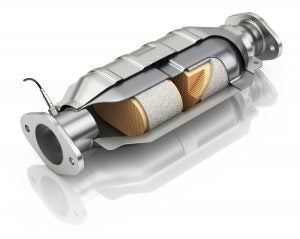
Cross section of a catalytic converter It may sound odd, but there is a strange crime wave happening across the country. Catalytic converters, which help reduce an automobile’s emission pollution, are being stolen out from under our very noses…and cars. Catalytic Converter Theft Nationwide, police are reporting a surge in cases. In St. Louis, catalytic converter thefts jumped more than eightfold, from 50 in 2019 to 420 last year. In Lexington, S.C., sheriffs’ deputies responded to 144 catalytic converter thefts between July and December, triple the number of cases over the year-earlier period. In Wisconsin, West Allis police finally nabbed one thief just last month, while statewide hundreds of the converters were reported stolen in 2020 and the trend isn’t slowing down. Why Are Catalytic Converters Stolen? So why is this specific car part being targeted? Because each catalytic converter contains metals that are more precious than gold. And it only takes a saw and three minutes to poach one. Catalytic converters are made with palladium and rhodium. The price of palladium hit a record of $2,875 an ounce last year Rhodium prices have skyrocketed to a record $21,900 an ounce this year, roughly 12 times the price of gold. After the thief cuts away a converter, he/she takes it to a recycler and earns roughly $120 per unit. The victim of the theft is left paying an estimated $1,200 for a replacement. Toyota Prius Catalytic Converter Theft “ Priuses are often targeted,” says Jake Schafer, service director at Smart Motors in Madison. "It’s probably due to the fact a Prius' converter contains more precious metals than what is installed in most vehicles. When all is said and done, though, it can cost the victim upwards $2,500 to have a Prius converter replaced.” Schafer says the dealership is currently replacing dozens of catalytic converters each month due to theft, but Smart Motors is being proactive by working with a manufacturer that supplies anti-theft protection. Cat Shield How to Prevent Catalytic Converter Theft: Anti-Theft Shield “We’ve invested in a catalytic converter protection system with Cat Security,” he says. “We will professionally install their ‘Cat Shield,’ which is a sturdy aluminum plate that provides a barrier against theft.” According to the Cat Security, there are four main reasons to have an anti-theft plate installed: Save on the potential loss of time and money. Put your mind at ease knowing your car is protected. Help put thieves out of business. Improve your vehicle’s underbody aerodynamics (the plate may actually help improve fuel mileage). Catalytic Converter Anti-Theft Shield Cost “The plate usually costs a few hundred dollars with installation,” says Schafer, “but it’s a small price to pay for protecting yourself from inconvenience and perhaps thousands of dollars if you fall victim to this very prevalent crime.”

Gas Prices on the Rise

Rising Gas Prices. Time to Upgrade Your Vehicle?

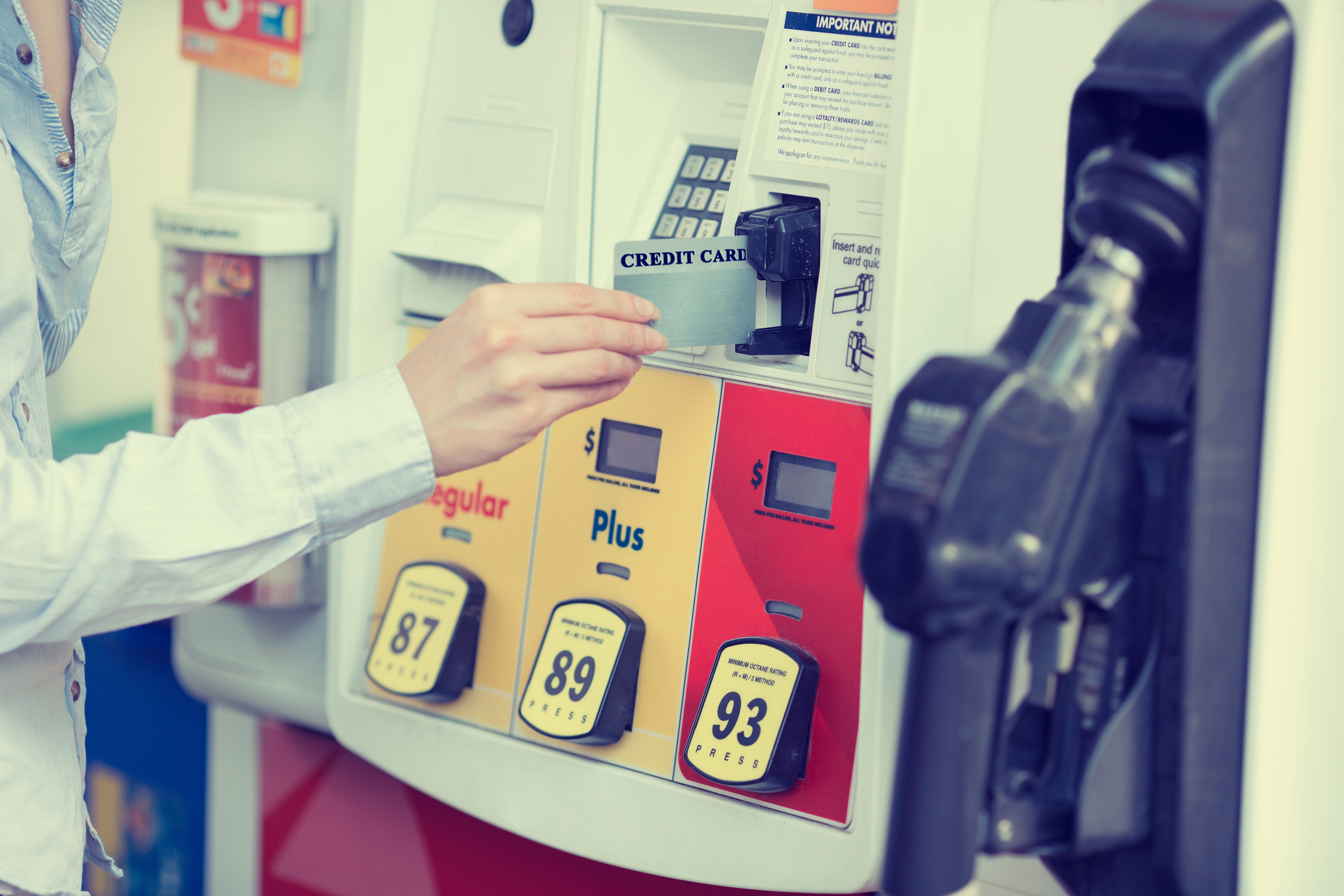
Safety and fuel efficiency make owning a new vehicle very attractive. If you currently own a gas-powered vehicle you know fuel prices change as often as Wisconsin’s weather. You also know there seems to be a consistent “coincidence” between heavy travel times like Memorial Day, Labor Day and Thanksgiving and a surge of prices at the pump. The Covid-19 pandemic has fueled a steady rise in gas prices due to logjams created in the global supply chain. The pandemic has also made travel by car the healthiest way to get from point A to point B. And as more Americans become vaccinated, many more people will undoubtedly embark on road trips to destinations far away from the home they’ve holed up in for months. What vacationers and commuters alike should know, though, is that purchasing a new vehicle may be worth the money. "With the steady increase in gas prices we are seeing an uptick in sedans and hybrid sales," says Justin Jackson, sales director at Smart Toyota. "We are typically a big hybrid dealer, but we are seeing a bigger increase and we can only believe has prices have a lot to do with it." New cars, trucks and SUVs are more fuel-efficient than vehicles manufactured just a few years ago, and they come with many more safety features. “A new vehicle can save a driver an average of $1,502 ($2249-$747) per year in gas,” says Jackson. “That means, on average, $125 saved per month that could be used toward the vehicle’s monthly payment.” BREAKING IT DOWN: (Based on the average American who drives 15,000 miles per year) New Hybrid Vehicle at 54 mpg                  vs.                           Older Vehicle at 18 mpg 15,000 divided by 54 = 277                                                                 15,000 divided by 18 = 833 Uses 277 gallons of gas per year                                                         Uses 833 gallons of gas per year 277 x $2.70 = $747 per yr. in gas                                                       833 x $2.70 = $2249 per yr. in gas “The savings are even greater if you move into a hybrid electric vehicle,” says Jackson. Jackson says the dealership has seen first-hand how hybrids have grown in popularity. More recently, with the release of the Prius Prime, which has an estimated 54MPG, and 133MPGe, rebirth of the Toyota Venza hybrid and now including the Toyota Sienna (mini-van) hybrid, local consumers are showing a renewed interest in hybrid vehicles. Today, Smart Motors is one of the top Toyota hybrid dealers in the United States. “Saving money on fuel makes a new car worth it, but there are a number of other good reasons like safety features that make upgrading beneficial,” says Jackson. He lists Toyota’s offering of Pre-Collision Systems with Pedestrian Detection Dynamic Radar Cruise Control Lane Departure Alert, and Road Sign Assist as a few examples of technologically advanced features that go beyond anti-lock brakes and air bags. Easy Tips to Save Money on Gas: Download apps like GetUpside that partner with gas stations nationwide to offer discounts to users. Use a gas station credit card and/or enlist in their rewards program. Don’t use premium if your car calls for regular. Wholesale clubs offer discounted fuel to members. Refuel before your gauge gets too low. Downsize the fuel bill by driving a smaller or more fuel-efficient vehicle. Driving faster than the posted speed limit burns more fuel and increases trips to the pump. Take some time to empty the trunk, clean out the back seat and remove the luggage rack. The lighter the vehicle, the better the fuel efficiency and the more money you save on gas. "Jack-rabbit" starts and hard braking increase fuel usage by as much as 40 percent. Check your tires regularly; under-inflated tires increase resistance and fuel consumption by up to six percent. Consolidate trips and errands to cut down on driving time can eliminate hundreds of miles – and dozens of gallons of gas.

12-20 blog

Bring It to the Smart Toyota Dealership: 5 Services You Can Count on

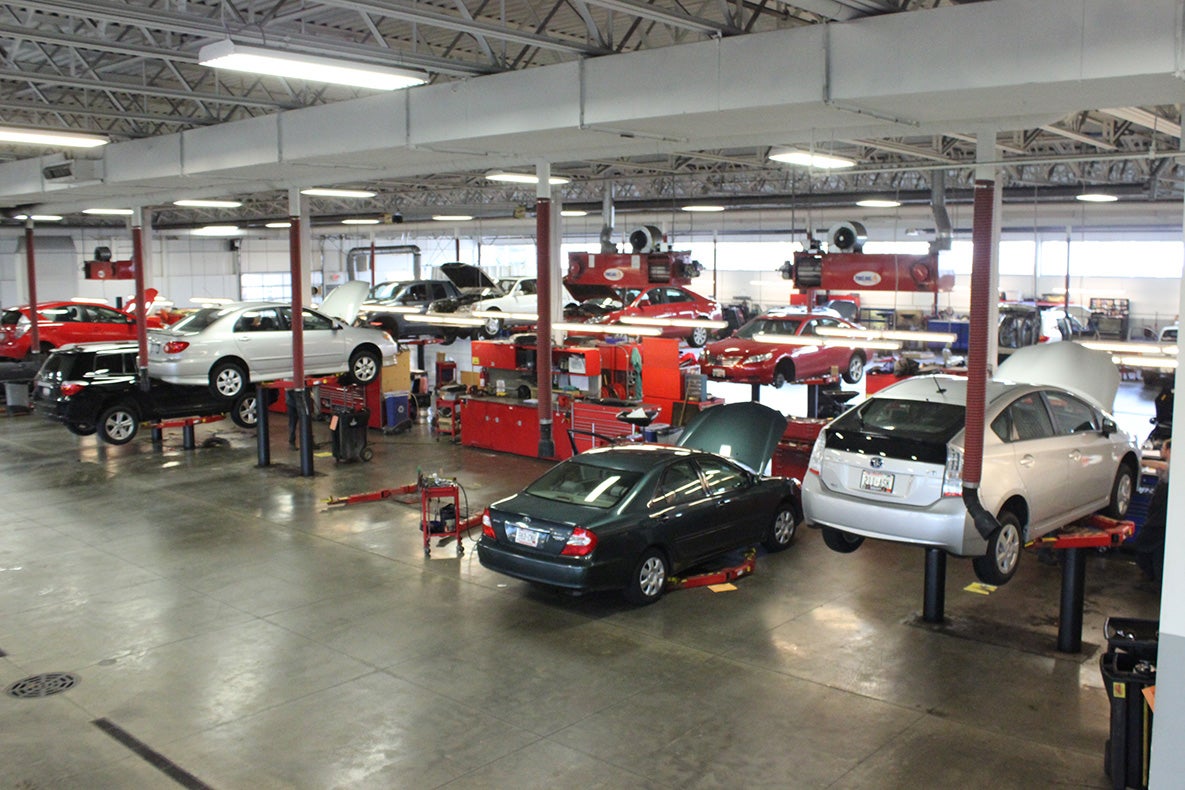
Purchasing a Toyota means you're the proud owner of a vehicle that is built to last while delivering the smoothest most enjoyable ride possible. And when it comes time to bring your car in for service, the trained professionals at Smart Toyota are there to make sure you and your car get the VIP treatment you both deserve. Our mission is simple, to ensure your car runs as perfectly as it did the day you drove it off the lot. Courtesy Oil Changes more At Smart Toyota, you're more than just a customer, you are a valued member of the Toyota community. And to show our appreciation, Smart Toyota gladly offers complimentary oil changes on new car purchases for the first two years/25,000 miles. Getting your oil changed at the appropriate time reduces harmful friction between your engine's moving parts, allowing your Toyota to run optimally. We only supply your vehicle with high-quality motor oil that helps to remove impurities while it lubricates. Brake Service Your brakes should function flawlessly at all times for obvious reasons, and there is no better place to have your brakes serviced than at Smart Toyota in Madison, WI. Our trained Toyota technicians will help determine how safe your brakes are, as well as the surrounding components such as brake rotors. This level of expertise can help save you money in the long run by spotting and preventing potential wear and tear signs before they occur. Tire Service Your tires are what connect your vehicle to the road and having tires that properly grip the road is monumentally important for the safety of you and your passengers. Our specialized technicians will give you a full analysis of your tires and current tread level and inform you of whether or not it is time to change them. You can also count on tire rotation, pressure, and balancing as part of this very important service. Smart Toyota Certified Parts All cars need a new part once in a while and this also applies to a great car like your Toyota. If you need a part replaced, your first and only destination should be your authorized Smart Toyota dealership. Aftermarket parts are not put through the same rigorous testing and certification process that Toyota's are. This means when things go wrong with an aftermarket part, there is no one to hold accountable. Friendly and Professional Team At Smart Toyota, we pride ourselves on building strong relationships with loyal customers. When you bring your vehicle in for service, you'll be met with a level of courtesy and professionalism that reminds you that you made the right choice by purchasing a Toyota from us. Whether you're meeting with a salesperson, manager, or service technician, you'll be greeted with a smile and a genuine desire to exceed your expectations. There are plenty of reasons why you should trust us with an investment as important as your vehicle. If you want to join this amazing community, visit Smart Motors Toyota today to view our incredible selection of new and certified pre-owned Toyota vehicles!

Contact Us

Fill out this form below and we'll contact you shortly
*Required Fields