

Blog / Car Maintenance

Blog

All Car Maintenance Toyota Vehicles Exploring Madison Around Town Madison Toyota Dealer Driving Safety Hybrid Vehicles Community Madison Toyota Service Toyota Car Care Tips Smart Toyota Service Smart Toyota News Toyota Safety Toyota Corolla Toyota Highlander Toyota Prius Charity Support Toyota Camry Toyota Sienna Madison Used Cars Toyota RAV4 Smart Motors Certified Used Vehicles Smart Toyota New Inventory Green Energy Smart Motors Used Cars Smart Motors Used Vehicles Toyota Supra Toyota Tundra Toyota Yaris Auto Body Repair Auto Body Shop Ball Body Shop Local Festivals Smart Buys Cars Smart Toyota Auto Parts Toyota Tacoma Employment Toyota 4Runner Toyota Avalon Toyota bZ4X Toyota C-HR Toyota Corolla Cross Toyota Land Cruiser Toyota Sequoia Toyota TRD Vehicle Acquisition Vehicle Buying
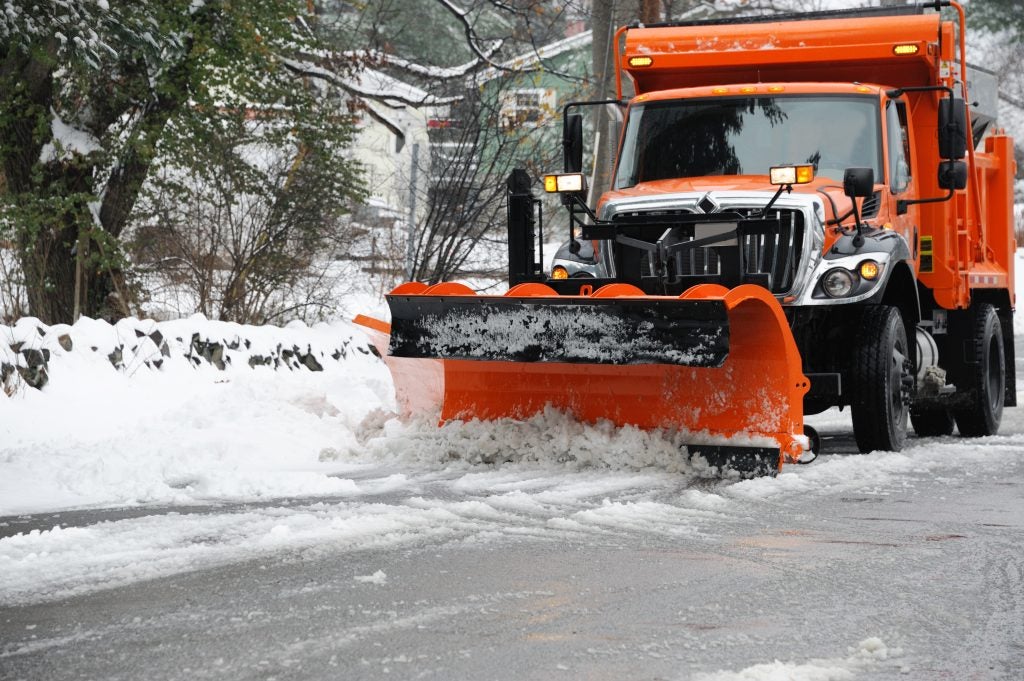
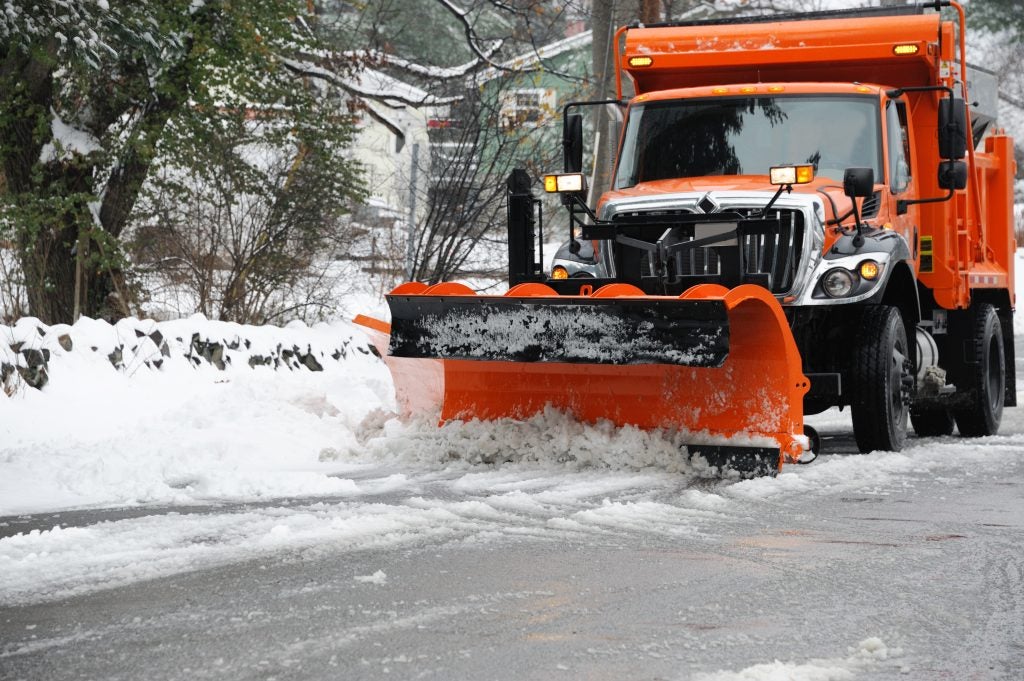
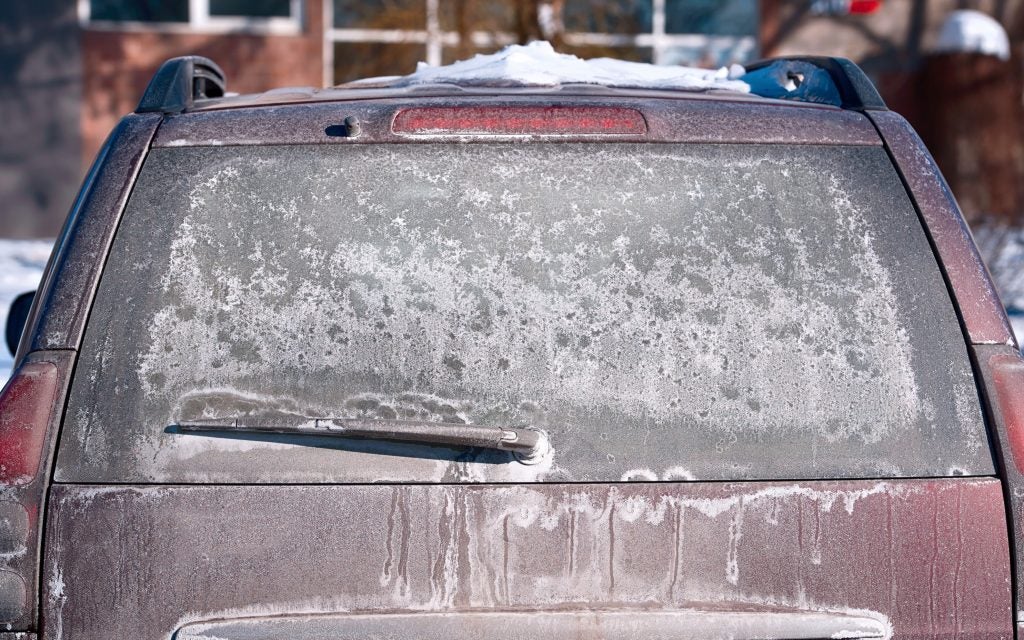
Winter salt covered vehicle in Wisconsin

Winter. Should You Wash Your Vehicle or Not?

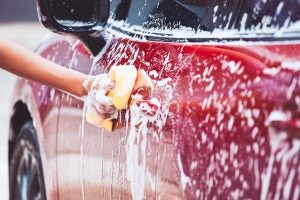
Is it worth it, really? Should I wash my vehicle, or just wait for spring? Under normal circumstances most vehicle owners love their car. It’s like an old friend, cheerfully waiting to take you where you need to go. But as the winter months in Wisconsin drag on, you find your feelings changing toward your tried and true buddy. To wash or not to wash; now that's the question. What was once a summer time escape from reality, suddenly becomes a chore. Come February and March, if you have not washed your vehicle, it becomes salt-covered, sludgy, dishwater-hued beast that is almost indecipherable from most of the other vehicles on the road. And the worst part is you don’t know what you should do about it. Part of you thinks you should probably wash the poor thing, but at the same time, it's Wisconsin - it's going to snow again, plus the streets are just going to be salted again. And on those rare breaks when the temperatures climb into the 40s, everyone and their uncle are in line to run their vehicles through the car wash. Do you just let it go? Jason Vasen, Master Diagnostic Technician at Smart Motors, says you should absolutely not let it go. Jason Vasen - Master Diagnostic Tech - Smart Motors - Madison, WI “Salt may keep the streets safe to drive on, but it’s a terrible thing to have on your car for extended periods of time,” Vasen says. “Salt leads to oxidation and rust. It can take years off the life expectancy of your vehicle.” Car Wash; Outside temperature matters Vasen says Wisconsinites ideally should wash their cars, trucks and SUVs about once every two weeks even in the dead of winter though only wash when outdoor temperatures are in the upper 30’s or in the 40’s to ensure doors and windows won’t freeze. If you're fortunate to have a heated or well insulated garage, you could push this to temps a little lower, but it's always a good idea to dry off your vehicle as well. Pop the hood, open the doors, including hatch/truck and dry them off. Not all car washes are created equal “You want to make sure it’s a quality wash, too,” he says. “Just washing the pretty parts may save your paint job for a few years, but it’s incredibly important to make sure salt and slush are removed from the wheel wells and undercarriage.” A touchless car wash with an underbody high pressure spray option/cycle is what you'll want to look for to help remove the salt, sand and grim from those hard to reach spots. When salt builds up on the wheel wells and undercarriage, it attacks the vehicle’s braking system and suspension, both of which could lead to dangerous situations on the roads. They are both expensive to repair, too, so making sure they are salt-free could save you money down the line. Clean wheel wells and undercarriage “Drivers can also get ahead of the game through routine maintenance,” Vasen says. “Quality mechanics will check for any issues and lubricate or use corrosion inhibitors on parts as needed for the winter months.” And don't forget wiper blades. They are an inexpensive way to ensure clear vision. Did you know? Where one parks during the winter can also play a role in how much damage is or isn’t done to a vehicle because of slushy and salty conditions. Ironically, vehicles parked outside for the duration typically experience less body damage than those that are garage kept. This is because the freezing temperatures do not allow the slush to melt, so it slows down the overall corrosiveness of the salt. “Bottom line; regardless of whether you store your vehicle inside or outside, it really is worth the time, effort and money to make every attempt to keep it clean,” Vasen says. Jason Vasen is a Master Diagnostic Technician at Smart Motors - Madison, WI, and was founded in 1908 by O.D. Smart and is one of the nation’s oldest automotive dealerships, is the mid-west’s largest hybrid dealer and one of Wisconsin’s largest volume Toyota dealers. Located at 5901 Odana Road, Smart Motors is Wisconsin’s only two-time President’s Cabinet Award recipient from Toyota Motor Sales for superior customer service & sales volume. See their history page for more details.
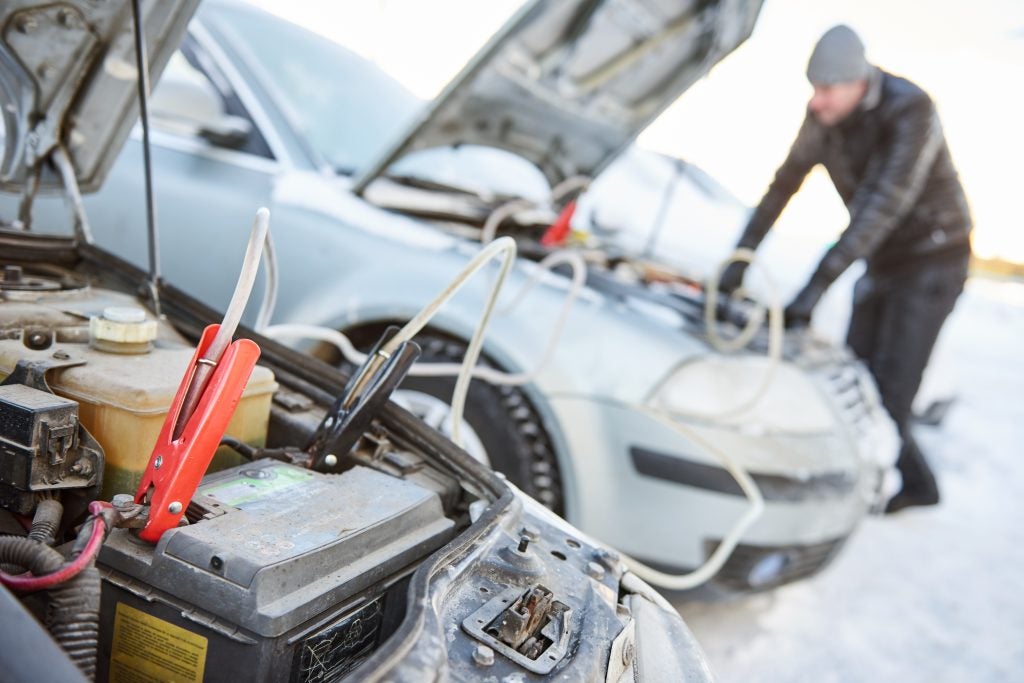
Jumpstarting your vehicle. Smart Motors Madison Wi.

Safely Jumpstarting Your Vehicle.

Tips & Safe Start Guide Cold winter weather in Wisconsin has vehicle owners scrambling to jumpstart their vehicles. Icy roads, plows shooting up clouds of snow and blinding light bouncing off packed snow cause all sorts of problems for Wisconsin's drivers, but one of winter's worst effects come before people even hit the road—winter causes discharged car batteries and vehicle jumpstarting presents a fair share of issues. Winter Checklist should include a battery test. Discharged (dead) batteries won't jumpstart Car batteries often become discharged in the winter because the cold affects the vehicle in two ways; A cold battery has less cranking power than a battery at normal temperature. Cold oil is thick oil, and thick oil is harder to turn over in the engine. While these traits occur independently of each other, they combine and make it harder for vehicles to start, effectively draining a battery down. A discharged battery can oftentimes be recharged and work fine, but immediate action is necessary as a discharged battery could freeze making it unable to be recharged, thus possibly ruining the battery. Charged batteries will not freeze. There are warning signs your battery may be failing. Traditional Vehicle Batteries vs Hybrid Vehicle Batteries Discharged batteries can occur in both traditional cars as well as more modern hybrid vehicles. And while many people might know how to jump start a traditional car, the precautions necessary for either jump starting or receiving a jump from a hybrid are slightly different, yet hybrid owners might not even realize this. “The hybrid is a fundamentally different design and has batteries located in different spots and takes on power differently,” says Smart Motors Master Diagnostic Technician Jason Vasen. “Hybrids with the 12 volt battery inside the passenger compartment like the Prius use an AGM battery which uses absorbed glass mats so there is no "loose" liquid to spray. Some hybrids use conventional 12 volt batteries located outside the passenger compartment which do carry the concern of potential explosion.” Jason Vasen, Master Diagnostic Technician, Smart Motors How can one be safe when jump starting a hybrid? Smart Motors' Jason Vasen put together the following checklists for how to keep vehicles safe and fully powered even through the worst of winter's fury. Jumpstarting a hybrid vehicle Don’t make a practice of using your hybrid to jump start other vehicles as you could greatly damage the discharged vehicle’s electrical system. Apply the parking brake and turn off the headlight switch and interior light. Turn off the hybrid system and remove the key if inserted. Open the hood; fuse block cover, and exclusive jump starting terminal cover. Connect positive clamp (red) jumper cable to the exclusive jump starting terminal. Connect the negative clamp (black) to a solid, stationary, unpainted, metallic point of the vehicle with the discharged battery. If the booster battery is installed in another vehicle, make sure the vehicles are not touching. Turn off all unnecessary lights and accessories. When boosting, use the battery of matching or higher quality. Any other battery may make for a difficult start. Allow the discharged battery to rest with the jumper cables connected for approximately 5 minutes. At this time, run the engine in the vehicle with the booster battery at about 2,000 RPM with the accelerator pedal lightly depressed. Start the hybrid system. Make sure the “READY” light is on. Disconnect the cables in reverse order: the negative cable and then the positive cable. Jumpstarting a traditional vehicle Park the booster vehicle close but not touching the one that needs to be jumped. Begin the process by clamping one of the positive jumper cable ends (red) to the positive battery terminal (labeled with a "+" on the battery) of the discharged vehicle. Connect the other end of the positive cable (red) to the positive battery terminal on the booster vehicle (again, confirm that a "+" is next to the battery terminal). Connect the negative cable end (black) to the negative battery terminal on the booster car (marked with a "-"). Finally, attach the other end of the negative cable to an unpainted metal surface on the engine of the discharged car. Start the discharged vehicle and let the two vehicles idle for a few minutes. Once the discharged vehicle is started and running smoothly, disconnect the jumper cables in the reverse order that they were connected. Drive the revived car to somewhere safe and secure before shutting off the engine. Smart Motors was founded in 1908 by O.D. Smart and is one of the nation’s oldest automotive dealerships. Smart Motors is the mid-west’s largest hybrid dealer, and is located at 5901 Odana Road, Smart Motors is Wisconsin’s only dealership to have ever earned the coveted President’s Cabinet Award from Toyota Motor Sales. This award is only given to the top 12 dealerships nationwide for superior customer service & sales volume. To learn more about Smart Motors, visit their dealership history page.

Wisconsin Winter. Vehicle Preparation. Are you ready?

Winter in Wisconsin Is Your Vehicle Ready for another Wisconsin Winter? As anyone who has ever lived through one can attest, winters in Wisconsin can get cold. Really cold. Not just nippy, but seemingly a few degrees above absolute zero cold. The biting sort of cold that, despite several layers of clothing, cuts through your body like a frozen blade of a knife. It stings! Thankfully, one only needs to be out in it for brief periods at a time; usually as long as it takes to go from a heated building to one’s vehicle and back again. Even though you may not be exposed to the blustery, frigid elements for long, your vehicle may have been sitting out for hours. Ideally, you can stay inside and remote start your transport. But one fantastically freezing day, you try it and nothing seems to happen. You’re going to have to brave the frozen tundra to try to get it started. You trudge over the frozen landscape, reach your vehicle, quickly nestle in, turn the key in the ignition, and – oh no! – all you hear is a hideous series of click-click-clicks, groans, and exhausted whirs. You’re in a bind now. Why oh why didn’t you winterize your ride!? Deadly Winter According to the National Weather Service, “Hundreds of people are injured or killed each year as a direct result of winter weather. Heavy snowfall and blizzards easily trap motorists in their vehicles and make walking to find help a deadly effort. Severely cold temperatures and wind chills during and after a winter storm can lead to hypothermia and kill anyone caught outside for too long.” Jason Vasen, Master Diagnostic Technician at Smart Motors in Madison, says there’s no time like the present to start getting your vehicle in shape for the unpredictable winter season. “If a car moves, many people assume everything is in good operating order,” says Vasen. “While the car might still have the oomph needed to go, preventative maintenance will help prevent future breakdowns … and major expenses.” Vasen recommends having your vehicle serviced to prepare it for the challenges winter can pose. Vehicle Winterization Checklist Winterization Checklist Battery –It’s not an illusion; it really does take more power to start your car in the winter because battery power decreases as the temperature drops. If your battery is already having problems, your risk of breaking down or becoming stranded increases. It is recommended to have a battery with at least the vehicle manufacturers CCA rating, most hybrids will have 12 volt batteries under 400 CCA which are fine for that application Cooling system – Your automotive service technician can tell you what antifreeze should be used and the appropriate coolant-to-water ratio to avoid potential freezing. Belts, hoses, spark plugs, wires and cables – While they can go bad at any time, if they do in the winter, you could be stuck in the cold for an unfortunately long period. Brakes and tires – the cold doesn’t necessarily harm these components, but it doesn’t hurt to make sure they are in the best condition to handle the hazards of winter driving. Winter Survival Kit “These areas might seem small compared to the engine or fuel intake system, but without the small things aiding the large items, your vehicle will not function properly,” he says. Vasen says all motorists should have a cell phone and phone charger handy, and it doesn’t hurt to have quality wiper blades installed and your windshield wiper fluid topped off. Drivers shouldn’t let their gas go much below a half tank in the wintertime, either. Plus he recommends keeping a worst-case-scenario-kit in your vehicle, filled with the following items: Junk in Your Trunk ·         A blanket ·         Several heavy duty garbage bags: Can be a makeshift rain coat; keep your clothing off the wet ground when changing a tire, or to collect wet items. ·         A shovel ·         Kitty Litter - which can help aid in traction ·         Jumper cables or a battery-powered portable booster ·         Flashlight or emergency light ·         First aid kit ·         Food ·         Jack and spare tire: Know how to use them — do a practice run if necessary. Smart Motors was founded in 1908 by O.D. Smart and is one of the nation’s oldest automotive dealerships, is the mid-west’s largest hybrid dealer and one of Wisconsin’s largest volume Toyota dealers. Located at 5901 Odana Road, Smart Motors is Wisconsin’s only two-time President’s Cabinet Award recipient from Toyota Motor Sales for superior customer service & sales volume.  For more information visit their history page.

Getting It Done During an Employee Shortage

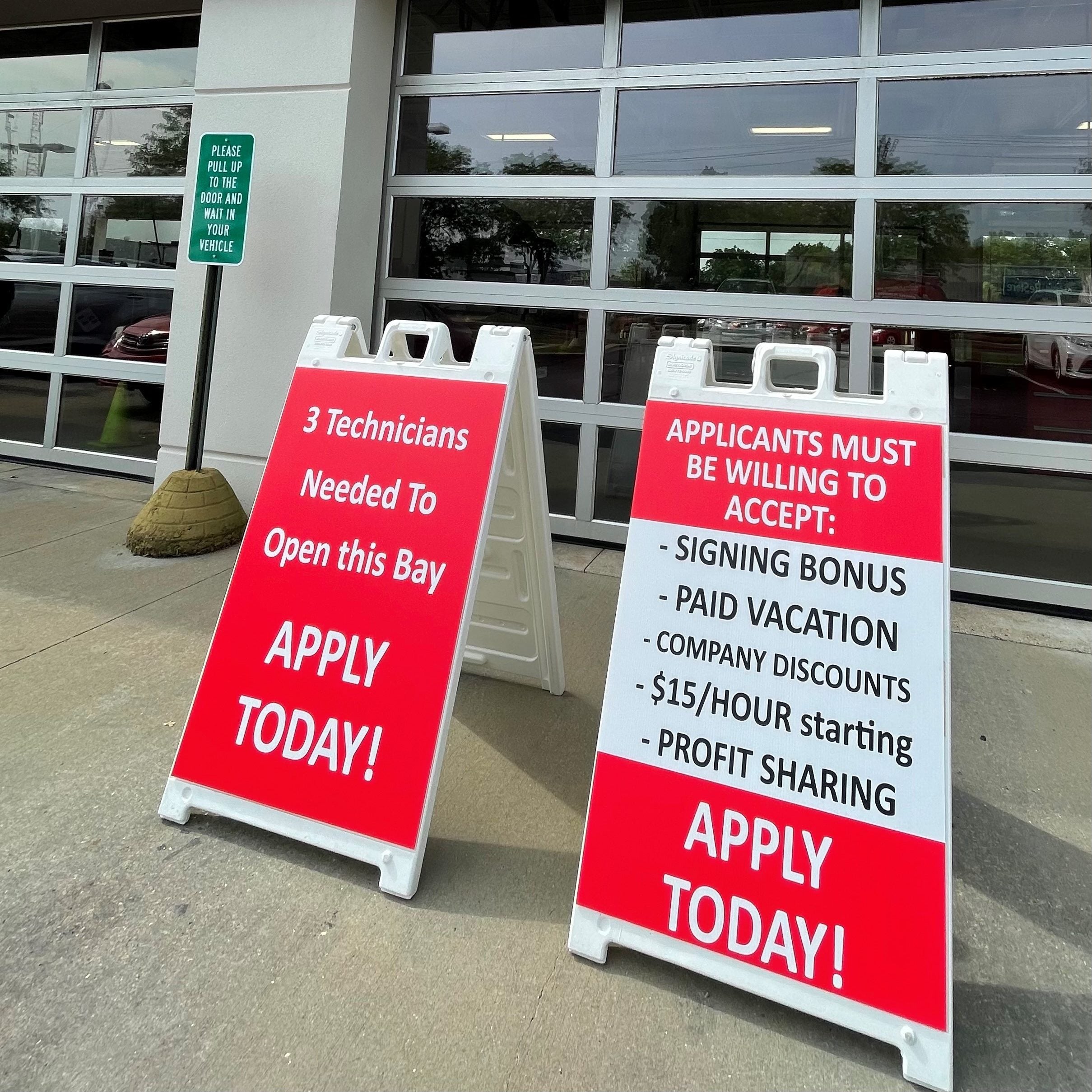
Signage used to attract applicants, while at the same time, explain longer-than-normal wait times. Employee Shortage The world and the way people live in it seems to be changing very rapidly. One aspect of this new way of life, as most of us are aware of, is the lack of people willing to work in the service industry. Essentially, an employee shortage. Frontline staff, even tipped employees are hard to come by as a result of the havoc Covid 19 caused for just about every 'service oriented business'; especially bars, restaurants and yes, the auto service industry. In fact, in December 2020, there were 1.3 million fewer workers in these fields than there were one year earlier. If you're in business, you've been affected. Today, employment shortages have extended to just about every retail establishment. Many industries, including those in the Madison area, are seeking qualified individuals to fill a variety of positions. Take Smart Motors, for example. They have a wide variety of openings for everything from Service Director, Express Maintenance Technicians and Parts people to Vehicle Sales and Management positions. “We have a number of roles to fill,” says Rob Jordan, Assistant General Manager at Smart Motors. “We have positions available for those with and without prior experience or expertise.” The competition to attract these highly sought-after candidates is mounting and local businesses are seeking ways to standout in the sea of ‘help wanted’ signs littered across local storefronts. “We’ve been in the Madison market for over 100 years,” says Jordan. “We have a long history of treating our employees well, and we respect our team members’ time and feel they should be fairly compensated for it.” Express Maintenance Team at Smart Toyota A complete employment package In addition to offering twice the current Wisconsin minimum wage, Smart is finding success with a combination of competitive compensation, signing bonus’ for certain positions, and the following benefits: Competitive Paid Time Off for Full Time and Part Time teammates 7 Paid Holidays Health, Dental, and Vision Insurance 401K Retirement & Company Matching program Aggressive Employee Parts and Service Discounts Annual Company Profit Sharing Keeping an eye on the future After toughing out the initial pitfalls of the Covid pandemic wherein the general public was not purchasing new vehicles, manufacturing & logistic challenges, and even getting a vehicle serviced was something people chose not to do, this particular industry is bouncing back. According to McKinsey & Company, “Intent to purchase new and used vehicles over the next 12 months is almost back to pre-COVID-19 levels (new cars at 94% versus pre-COVID-19 levels, and up by 7% over September 2020; used cars at 97% versus pre-COVID-19 levels, up by 1% compared to September 2020).” “Despite the past several months of not having many new vehicles “on the ground”, we are progressively getting back on track,” says Justin Jackson, General Sales Manager for Smart Toyota. “Demand continues to remain strong, and rest assured the automotive industry isn’t going anywhere. It’s here to stay, so choosing to make it your career is a great investment in your own future.” Jordan cites memes he’s come across recently on the internet encouraging the benefits of trade schools and apprenticeships. He says one in particular really struck him. “It compared a college student with a degree in philosophy and $100,000 worth of debt to a 4-year paid apprentice with no student debt and earning $80K annually,” he says. “I’m certainly not saying we would turn away college educated candidates, but if you have experience and an education in automotive or have a desire to learn, we would really like to meet with you.” About Smart Motors Smart Motors was founded in 1908 by O.D. Smart and is one of the nation’s oldest automotive dealerships, is the mid-west’s largest hybrid dealer and one of Wisconsin’s largest volume Toyota dealers. Located at 5901 Odana Road, Smart Motors is Wisconsin’s only two-time President’s Cabinet Award recipient from Toyota Motor Sales for superior customer service & sales volume.  For more information visit their history page.

Winter is Coming ... Will Your Tires Last the Season?

You know it's going to happen. You’re in your car waiting for the traffic light to turn green and there's a dusting of light snow on the pavement. After a few moments, light turns green, you step on the gas pedal and your tires spin on the wet pavement. It takes a second or two for them to catch traction and propel you forward. You cringe. Is this a sign you need new tires? If you’re like most people, you hate the thought of vehicle maintenance and upkeep. You just want to get in the driver’s seat and go and not worry about pesky things like oil changes, new brakes, wiper blades, a dead car battery and purchasing new tires! What do you know about vehicle maintenance? It’s a completely foreign concept to you and you’re always afraid of making the wrong – and possibly very expensive – decision. The good news is that a little know-how can go a long way when it comes to replacing a set of tires. The simplest thing you can do is ask a qualified and trusted auto shop service technician what he or she would recommend. “Excuse the pun, but we would never steer you in the wrong direction,” says Robert Jordan, Smart Motors’ Operations Manager. “If you give us a few basics about your driving habits, we can help you make the right choice for your needs.” Most tires need to be replaced about every four to six years, although high mileage and prolonged exposure to the elements will shorten your tire’s life expectancy. Regardless of when you need to replace them, you basically have a choice between three options: all-season, summer (a.k.a. high performance), and winter tires. “For most drivers in the Madison area, a good set of all-season tires are the way to go,” says Jordan. All-Season Tire: This type of tire come in S- and T-speed ratings. They grip the road well under most weather conditions and are long-lasting. They are the most common tires found on mainstream cars and SUVs. Truck owners have a similar option with either all-season or all-terrain truck tires. Summer or High-Performance Tire: Driving enthusiasts who prefer sports cars and performance sedans are likely to forego all-season radials and instead opt for summer or high-performance tires. Summer tires are excellent for dry conditions. They handle beautifully as long as there aren’t any adverse weather conditions to contend with. But they certainly aren’t for everybody. Jordan recommends summer tire owners should also invest in a set of winter tires if they want to drive their vehicle year-round. He says that what winter tires lack in performance handling they more than make up for in safety in rain, sleet and snow. Winter Tire: People who live in rural areas and have a long commute to work on roads often covered in snow and ice should probably swap out summer or even all-season tires with winter tires before the first snowflake falls to be on the safe side. “You shouldn’t really think of it as an added expense", says Jordan. It’s an investment. Switching between two sets of treads means both sets of tires will last longer, which could save you money in the long run. Tire Size: No, not all round tires (is there any other kind?) are created equal. Aside from the different types of tread, it’s important to know the size tire you need so your vehicle’s handling and safety isn’t compromised by ill-fitting radials. So how do you know what size tire is on your vehicle? You can locate your vehicle’s recommended tire size by consulting your owner’s manual, or it’s also printed on the decal located inside the driver’s side door jamb. “Most people don’t know what they’re looking at when they see the cryptic set of letters and numbers indicating their tire size,” says Jordan “It will look something like ‘P215/60R16.’ No worries, though. As long as you have that information, you can order tires anywhere. Any tire store can help you interpret this number for you and help you find the perfect tire for you. Lastly, when selecting your next set of tires, it's helpful to know how many miles you want your tire to last. You may have an option between 45,000-mile tires and 80,000-mile tires. The 80,000 set is almost certainly going to run you a higher price, but if you can afford it you can afford to not have to worry about replacing your tires again for quite some time. Also, if you know how many miles you drive, on average each year, this can help you select not only the right tire for your vehicle, but for your driving habits too.

Is Your Vehicle Ready to Handle the Summer Heat

You open your car door, a blast of heat nearly knocks you out. You pause for a moment and contemplate just how toasty your seat is, not to mention your steering wheel. You take the plunge and inch into the vehicle. Hot! Hot! Hot! No worries, though. You know your air conditioner will kick in in no time. You hold your face near the air vent and wait ... why isn’t there cool air flowing? You turn some knobs and flick some switches, and still nothing. Your A/C IS BROKEN!!! Jake Schaefer, service director at Smart Motors in Madison, says there are many steps one can take to avoid such a sticky situation. “Wisconsinites know how important it is to winterize their vehicles, but often neglect to ‘summer-ize’ them, too,” Schaefer says. “While some things can easily be done by the owner, there are also some where a service professional comes in handy.” Schaefer says it is wise to have a service technician thoroughly inspect your vehicle’s HVAC (heating, ventilating and air conditioning) system at least once a year. Often you can request this service in conjunction with another service such as an oil change. Typical A/C service consists of the following steps: • A visual inspection of hoses, lines, seals and other components for leaks as well as inspecting the drive belt for cracks or damage. • A check of pressures to test operation, refrigerant charge and outlet temperatures. • If the system is found to be low on refrigerant, a leak test is performed to find the source of the leak. Keep in mind that if your vehicle is leaking refrigerant, it is damaging the ozone layer. • A/C service should also include a check of the compressor’s drive belt and tension. These measures should be enough to get you comfortably through the heat, but Schaefer says his team is trained to offer additional measures that will help your car stave off the heat of the street. Testing Your Battery Additional procedures that either the vehicle owner or service technician can perform are: • Check the level and strength of the coolant. A low coolant level may allow your engine to overheat. Make sure the coolant reservoir is filled to the proper level. Wait until the engine has cooled to check the level inside the radiator. If low, add a 50/50 mixture of the specified coolant and water. • Make sure the cooling fan works. The electric cooling fan should come on when the air conditioner is turned on to MAX. No fan may mean a defective fan motor, relay or electrical problem. • Battery evaluation. Batteries are lasting longer than they used to but the key with a battery evaluation is in the testing which gives both the available cold cranking amps vs. what the battery is rated for and the second is a battery health check which indicates potential battery life and can often predict a battery failure before there are symptoms. Hot weather is actually harder on batteries than cold weather because it increases the rate of evaporation of the liquid electrolyte inside the battery. • Change the oil. Replacing old dirty oil with fresh oil can increase the lubrication protection for your engine. • Check or replace the windshield wipers. Natural rubber wiper blades have a limited life of a year or less. Sun exposure, extreme heat and cold all age the rubber and cause it to become hard and brittle. • Check tires. Check the tire for wear, uneven wear, age cracks or damage. Check the inflation pressure in all the tires, including the spare. Underinflated tires makes the tires run hot and increases the risk of a blowout. Lastly, Schafer says there are a few steps that vehicle owners can do themselves to stay cool: • Wax the body. Your vehicle’s body should be waxed or sprayed with some type of protectant to help shield the paint from the ultraviolet rays from the sun, and summer smog in urban areas. • Keep your cool. Buy a sun shade for the windshield to reflect light so the interior doesn't get so hot if the vehicle is parked in direct sunlight. Also, close the sunroof sunshade, and leave the windows cracked so hot air can escape. This can lighten the cooling load on the air conditioner when the vehicle is first started, and prevent you from getting a hot seat or burning yourself on hot interior surfaces. • Protect yourself. Wear a hat and sun screen, and carry a bottle of water in the car in case you get stuck for a long period of time in traffic or have a break-down on a hot day. Schaefer says these precautions should be enough to keep you and your vehicle cool. Of course bad things happen at the absolute worst time, but taking some simple preventative measure should drastically lower the risk of them happening to you.

Driving in Heavy Rain is No Splashing Matter

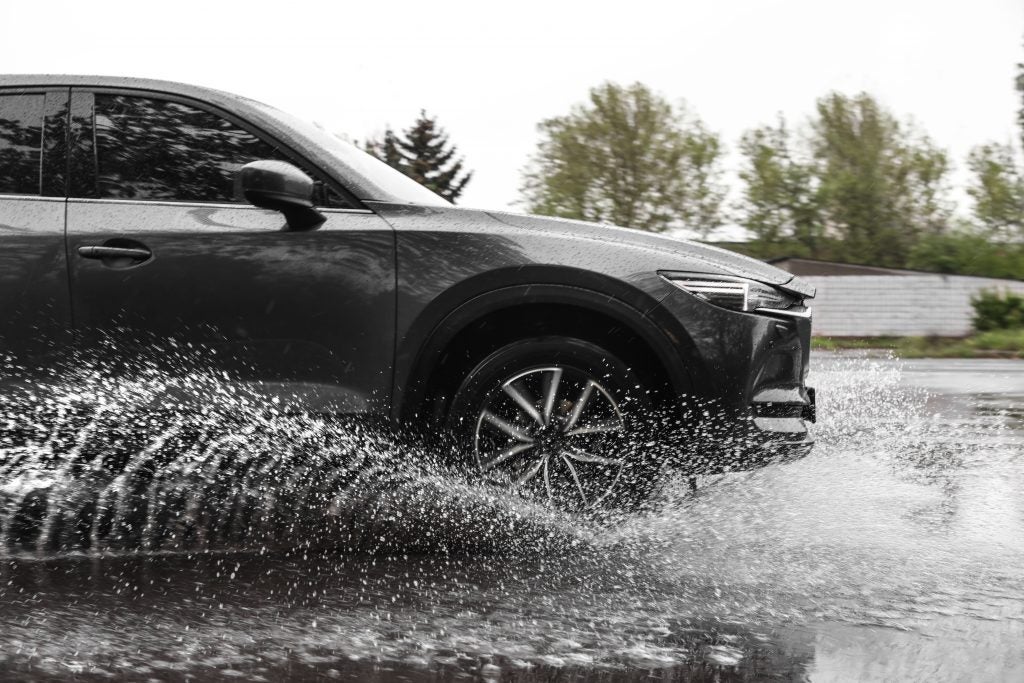
Imagine, you’re driving along on an overcast summer day. You’re minding your speed, traffic is light, and there doesn’t seem to anything particular to be concerned about. You’re driving along on an overcast summer day. You’re minding your speed, traffic is light, and there doesn’t seem to anything particular to be concerned about. Suddenly it begins to rain. You know the drill: turn on your windshield wipers, make sure your headlights are on, and tap the brakes to cancel the cruise control. These are all common sense actions all drivers should take even while driving in a light rain. The rain starts coming down harder and harder but visibility is still pretty good so you’re not concerned. But then you experience a very odd sensation. Your vehicle seems to be floating above the road. It seems to have a mind of its own. You might as well make suggestions to your car as to how to stay on the road as you’re now powerless over the steering. You know what’s happening. It’s happened before. You’re hydroplaning. And hydroplaning can be just as dangerous as sliding across a frozen highway. What is Hydroplaning? Hydroplaning usually occurs within the first 10 minutes of a rainstorm when oils, dirt and debris begin to wash off the surface of the road. It also happens when there is too much water for the tread of your tires to scatter, so your vehicle is literally lifted above the surface of the water. What to Do if You're Hydroplaning While Driving Take your foot off the accelerator, don’t brake, and wait for your tires to slow down to a point where they can handle dispersing the water. Continue on at this slower speed until the storm lets up. How Can I Prevent Hydroplaning When It's Raining? “Having quality tires with the proper amount of tread is one of the best things a driver can do to prevent hydroplaning,” says Jake Schaefer service director at Smart Motors. “A lot of people wait until winter is approaching to change their balding tires, but we recommend you change your tires at 4/32” remaining tread, regardless of the time of year, so that you don’t experience a lag in wet weather performance.” 100 Year Flood The 100-Year Flood in Madison, WI Hydroplaning is just one of the dangers of driving in heavy rains, as many Wisconsinites might have learned in 2018 when we experienced the “100-year flood” in which up to 20 inches of water was collected in certain areas. At Smart Motors in Madison, well over 100 flood damaged vehicles were towed in after the waters subsided to a navigable degree. Owners were hoping against hope their cars and trucks could be repaired. Can Driving in the Rain Damage Your Car? “Time and time again, we had to break the news to people that their car or truck was totaled,” says Jake Schaefer. “In fact, the totaled vehicles far outnumbered the ones that could be repaired.” Schaefer says the majority of the totaled vehicles experienced water getting into the engine, which can cause irreversible damage. Schaefer says that unfortunately, there is no water-depth rule. He says that one need not drive through a 12” puddle to cause damage. Even in shallow water, all it takes is just the right splash to find its way into the engine and ruin the vehicle. Driving in Heavy Rain: Safety Tips Preventing water damage can be tricky and certainly not foolproof, but Schaefer says there are some measures drivers should take if there is a threat of flooding. “First of all,” he says, “If you don’t absolutely have to drive in flood-like conditions, don’t!” Also, remember the National Weather Service trademark phrase; “Turn Around. Don’t Drown.” If there are flood warnings, the first consideration for a driver is to move the vehicle to a higher ground if that is an option. If this is not an option, Schafer says to leave the vehicle where it is. If you are on the road during flood conditions, exercise extreme caution and a use a lot of common sense. Schaefer says if you can’t see the road because there’s so much standing water, don’t risk driving through it. “You can’t determine water depth without going in,” he says. “My suggestion is to pull over safely and observe other vehicles that may brave their way through the flooding.” Schaefer also warns that during a flood, there may no longer be any roadway under the water and you could drive into an impromptu river. If the water is over 12" in depth, it could sweep a car away. Schafer offers these additional helpful hints for driving in heavy rain conditions: • If at all possible, wait to embark on your trip until the weather improves. • Check your tires periodically and replace them if the tread is worn to a dangerously low level. • Slow down. • Do not use cruise control. • Turn on your headlights. In some cases you might even want to turn on your hazards. • Definitely use your windshield wipers. Replace them if they are damaged or worn. • Maintain a safe distance from other vehicles. • Avoid heavy or sudden braking. • As mentioned above, be wary of standing water. • If you’re hydroplaning, step off the gas and try not to brake. • Ventilate your vehicle to prevent windows from fogging up.

Car Cleaning Tips | Bugs!

Keeping that Showroom Shine! I remember as a kid my parents always had me washing the family vehicles weekly (or at least it seemed like it) during the summer. Sure, you could get a great tan, which was always a plus, but getting those pesky bugs removed from the hood, backside of the mirrors, around the headlights and grill was never easy. So, whether you send our kids out to wash your vehicle this summer, or you plan to do it yourself, here are are few tips to help make this a little easier for you; Use a high-pressure washer or a hose with a good nozzle that can blast off those remains. Soaking is important - for those larger bugs. Sponge with meshing and microfiber cloths - you'll need to put a little elbow grease into it, but in the end using a combination of sponge with meshing to remove the bugs and a microfiber to shine will make you the envy of the neighborhood. Wax on. Wax off. Not only works for the karate kid, but will protect your vehicle's exterior paint, while at the same time, save you time removing those bugs during the next washing.

April - National Car Care Month

April is National Car Care Month: Time to Make Auto Care a Top Priority Cars, just like humans, need an annual checkup, and there's no better time than during National Car Care Month. National Car Care Month aims to get cars healthy and running in top shape as millions of Americans head out on summer road trips. Some simple checkups can increase gas mileage and add to the lifetime of a vehicle. “Car Care Month is just a really good time to make sure your car is running its best,” says Jake Schaefer, Service Director at Smart Motors. “A car is an investment and paying attention in taking proper care of it is much better than paying thousands of dollars to replace it later.” Schaefer cites several common trouble areas as spots to pay attention to during Car Care Month and any other time of the year. Tires, filters, oil, interior, and exterior. “The great part about these is just about anyone can perform these functions at home—specialized tools aren't really necessary,” says Schaefer. Tires When tires are not correctly inflated, they just don't perform properly. With a simple tire gauge that costs under $10, people can see if tires are at the manufacturer's suggested level. The vehicle suggested inflation level is usually found on a sticker inside the driver’s side door or the glovebox or in the owner’s manual. And it is good to be at the proper level. For every three PSI (Pounds per Square Inch) below that level a car tire loses, it becomes one percent less efficient and wears 10 percent faster. These numbers add up cumulatively, so if a car is 10 PSI under, that's over three percent of wasted fuel every time someone gets behind the wheel. If someone doesn't want to get a tire gauge, just keep in mind, looks aren't deceiving. If the tire looks low, it is most likely low. Filters The vast majority of vehicles have internal combustion engines. And the science behind combustion requires both a fuel source and air. If this air isn't clean, it will hamper the combustion process, which is why cars have engine air filters. However, if these filters are dirty, they will let these impurities through and decrease efficiency by up to seven percent. To check the air filter, look in the owner's manual and find out where the filter is located. Then pop open the hood and remove the filter. Hold it up to the sun; if light streams through, the filter is good. If not, drop it on the ground several times and retest. If sunlight is still not visible, a new filter is required. Oil Changes Everyone knows cars need oil changes, but why? The purpose of oil in a car engine is to keep all internal parts lubricated and running smoothly. As oil ages or gets used, it breaks down and its lubricating properties diminish. An oil change replaces the dirty oil and allows parts to be freshly lubricated with new oil. Almost all models of cars include an engine oil dipstick to allow people to check the vehicles engine oil level. Locate the dipstick, pull it out, and place it back in the engine, ensuring it goes all the way down. Pull it out, and without changing the orientation, see where the oily part meets the dry part, if it's between the two marks on the stick, the oil level is good. Exterior A winter season full of salt and sand can do a number on the exterior and can even lead to rusting. As temperatures rise, it's advised to visit a good car wash, one that gets all of the random debris not only off the car, but from underneath the car as well. Waxing a car helps the exterior paint last longer and shine. Instead of applying one heavy coat of wax, apply several thin coats, after the previous coat has cured. This technique will bring out the vehicles best color and depth. Interior A good thorough cleaning of carpet and upholstery will remove stains, and winter’s tracked in salty residue. This will leave the car clean and smelling fresh. A word of caution when cleaning windows, do not use a glass cleaner to clean the rear window, as this can cause damage to the rear window defogger heater wires.

Certified Collision Repair. Why it Matters

The standard of quality you expect. It is never easy when you’re involved in an accident, and the last thing you want to worry about is if the body shop you choose to repair your vehicle will do a quality job. How can you ensure not only the quality of collision repair, but be assure the equipment, parts and technicians working on your vehicle are qualified professionals?  Simple. Certification. As a Toyota Certified Collision Center, Ball Body Shop – a division of Smart Motors, takes the risk out of collision repair through the rigorous Toyota certification process and on-going continuing education, equipment specifications, parts requirements, and continuous customer experience monitoring. Ball Body Shop | 2225 Eagle Drive, Middleton, WI | 608.831.5944 “It’s our commitment to excellence in collision repair professionalism, repair quality and customer satisfaction”, says Ball Body Shop manager James Anderberg. “Our staff is uniquely qualified to get the job done right, while at the same time, putting our customers at ease during what can be a stressful time for them.” Benefits of choosing a Toyota Certified Collision Center for your vehicle’s repairs are abundant and include: - Toyota Certified Technicians. - Toyota Certified Management team provides the knowledge and expertise to answer your question quickly, accurately and will help navigate the insurance process (if needed) so you and your vehicle are back on the road as quickly as possible. - State-of-the-art tools & equipment used to restore your vehicle to the original manufacturer specifications. - Genuine Toyota Parts. - Third-party customer service monitoring is used to ensure your experience is exceptional. You have the right to choose the body shop you want to repair your vehicle and choosing a Toyota Certified Collision Center is the easy choice.

Responding to Recent Rash of Catalytic Converter Thefts

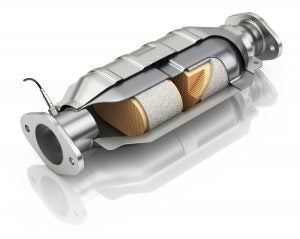
Cross section of a catalytic converter It may sound odd, but there is a strange crime wave happening across the country. Catalytic converters, which help reduce an automobile’s emission pollution, are being stolen out from under our very noses…and cars. Catalytic Converter Theft Nationwide, police are reporting a surge in cases. In St. Louis, catalytic converter thefts jumped more than eightfold, from 50 in 2019 to 420 last year. In Lexington, S.C., sheriffs’ deputies responded to 144 catalytic converter thefts between July and December, triple the number of cases over the year-earlier period. In Wisconsin, West Allis police finally nabbed one thief just last month, while statewide hundreds of the converters were reported stolen in 2020 and the trend isn’t slowing down. Why Are Catalytic Converters Stolen? So why is this specific car part being targeted? Because each catalytic converter contains metals that are more precious than gold. And it only takes a saw and three minutes to poach one. Catalytic converters are made with palladium and rhodium. The price of palladium hit a record of $2,875 an ounce last year Rhodium prices have skyrocketed to a record $21,900 an ounce this year, roughly 12 times the price of gold. After the thief cuts away a converter, he/she takes it to a recycler and earns roughly $120 per unit. The victim of the theft is left paying an estimated $1,200 for a replacement. Toyota Prius Catalytic Converter Theft “ Priuses are often targeted,” says Jake Schafer, service director at Smart Motors in Madison. "It’s probably due to the fact a Prius' converter contains more precious metals than what is installed in most vehicles. When all is said and done, though, it can cost the victim upwards $2,500 to have a Prius converter replaced.” Schafer says the dealership is currently replacing dozens of catalytic converters each month due to theft, but Smart Motors is being proactive by working with a manufacturer that supplies anti-theft protection. Cat Shield How to Prevent Catalytic Converter Theft: Anti-Theft Shield “We’ve invested in a catalytic converter protection system with Cat Security,” he says. “We will professionally install their ‘Cat Shield,’ which is a sturdy aluminum plate that provides a barrier against theft.” According to the Cat Security, there are four main reasons to have an anti-theft plate installed: Save on the potential loss of time and money. Put your mind at ease knowing your car is protected. Help put thieves out of business. Improve your vehicle’s underbody aerodynamics (the plate may actually help improve fuel mileage). Catalytic Converter Anti-Theft Shield Cost “The plate usually costs a few hundred dollars with installation,” says Schafer, “but it’s a small price to pay for protecting yourself from inconvenience and perhaps thousands of dollars if you fall victim to this very prevalent crime.”

Time_for_Transmission_Repair_5_Signs_of_a_Faulty_Transmission_637473341457095167

Time for Transmission Repair? 5 Signs of a Faulty Transmission

What Are the Signs of Your Transmission Going Out? Your car's transmission is a vital component of its performance and safety. If your transmission begins to wear out, your car will probably have trouble driving properly, which could be dangerous. Read ahead to learn 5 signs that your vehicle is in need of a transmission repair. more 1. Burning Smell A burning smell says a lot about your vehicle's safety and functioning. If you notice the odor of burning plastic, smoke, or melting wires, this could indicate that your transmission is overheating or that the transmission fluid is burning. Worst case scenario, this smell could lead to an electrical fire, which is incredibly dangerous for you and other drivers on the road. If a burning smell is coming from your vehicle, contact a mechanic right away. They will be able to advise you about the best next steps. 2. Strange Noises When Your Car is In Neutral If you're worried about your transmission, one way to test its functioning is to put your car in neutral for a few minutes. If you begin to notice strange noises while your car is in neutral, your transmission oil may need to be changed. These noises could also indicate that your transmission needs a replacement part, or could even need to be replaced altogether. The best way to know how strange neutral noises relate to your transmission is to visit an auto shop right away. 3. Trouble Switching Gears If you have trouble switching your vehicle from one gear to another, you could have transmission problems. Low or improper transmission fluid often affects your ability to switch gears, which could be an easy fix by a mechanic. Slipping gears are another sign of transmission failure. If your car slips from one gear to another while you are driving, this could be incredibly dangerous for you and other drivers. The first time you notice this issue, visit a mechanic right away to diagnose and fix the problem. 4. Leaking Fluid Leaking fluid is another surefire sign that your transmission is in need of repair. Transmission fluid is red and smells sweet, making it fairly easy to identify outside your vehicle. Look underneath your car, on the floor of your garage, or on your driveway for this fluid. If you notice any signs of leaking fluid from your vehicle, let your mechanic know as soon as possible. 5. Vibrating or Shaking If your vehicle's transmission is acting up, your car may begin to shake or vibrate when you change gears. Any feeling of unsteadiness or vibration should warrant an immediate trip to the shop, as these signs could indicate a serious problem with your transmission or engine. Your mechanic will be able to diagnose the issue best and fix it before it becomes worse. Visit Us Today for Transmission Repair in Madison Noticing a problem with your transmission may feel scary or stressful, but our mechanics make the repair process as quick and painless as possible. Contact Smart Toyota today to schedule a repair or vehicle service. We proudly serve drivers throughout the greater Madison, WI area, including Sun Prairie, Middleton, and beyond.

Contact Us

Fill out this form below and we'll contact you shortly
*Required Fields