


Driving in Heavy Rain is No Splashing Matter
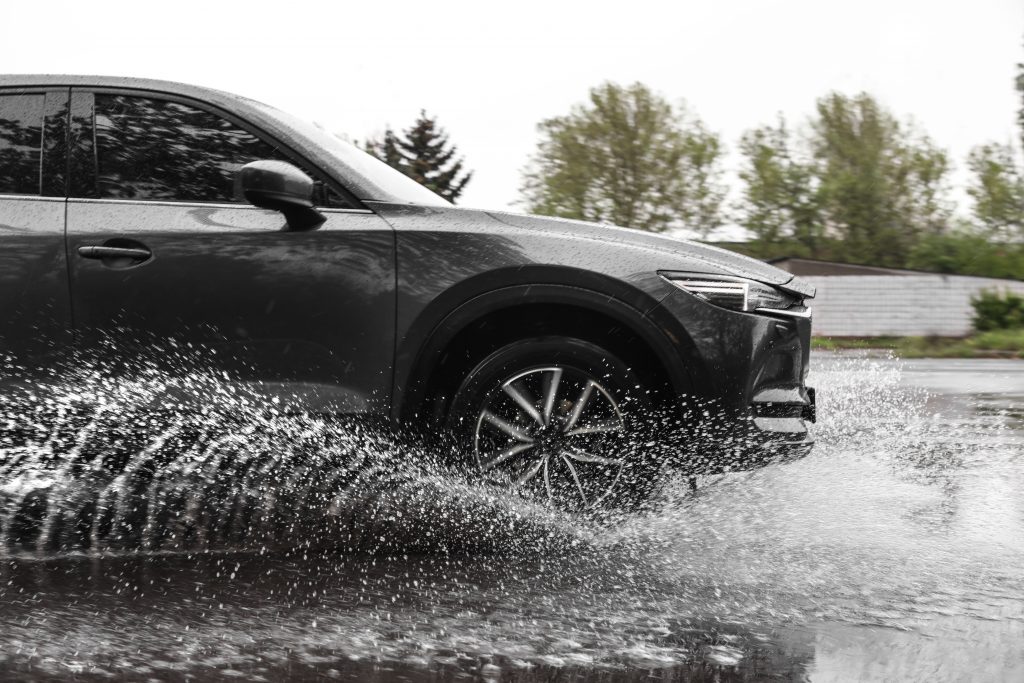 Imagine, you’re driving along on an overcast summer day. You’re minding your speed, traffic is light, and there doesn’t seem to anything particular to be concerned about. You’re driving along on an overcast summer day. You’re minding your speed, traffic is light, and there doesn’t seem to anything particular to be concerned about.
Suddenly it begins to rain. You know the drill: turn on your windshield wipers, make sure your headlights are on, and tap the brakes to cancel the cruise control. These are all common sense actions all drivers should take even while driving in a light rain.
The rain starts coming down harder and harder but visibility is still pretty good so you’re not concerned. But then you experience a very odd sensation. Your vehicle seems to be floating above the road. It seems to have a mind of its own. You might as well make suggestions to your car as to how to stay on the road as you’re now powerless over the steering. You know what’s happening. It’s happened before. You’re hydroplaning. And hydroplaning can be just as dangerous as sliding across a frozen highway.
What is Hydroplaning?
Hydroplaning usually occurs within the first 10 minutes of a rainstorm when oils, dirt and debris begin to wash off the surface of the road. It also happens when there is too much water for the tread of your tires to scatter, so your vehicle is literally lifted above the surface of the water.
What to Do if You’re Hydroplaning While Driving
Take your foot off the accelerator, don’t brake, and wait for your tires to slow down to a point where they can handle dispersing the water. Continue on at this slower speed until the storm lets up.
How Can I Prevent Hydroplaning When It’s Raining?
“Having quality tires with the proper amount of tread is one of the best things a driver can do to prevent hydroplaning,” says Jake Schaefer service director at Smart Motors. “A lot of people wait until winter is approaching to change their balding tires, but we recommend you change your tires at 4/32” remaining tread, regardless of the time of year, so that you don’t experience a lag in wet weather performance.”
100 Year Flood
The 100-Year Flood in Madison, WI
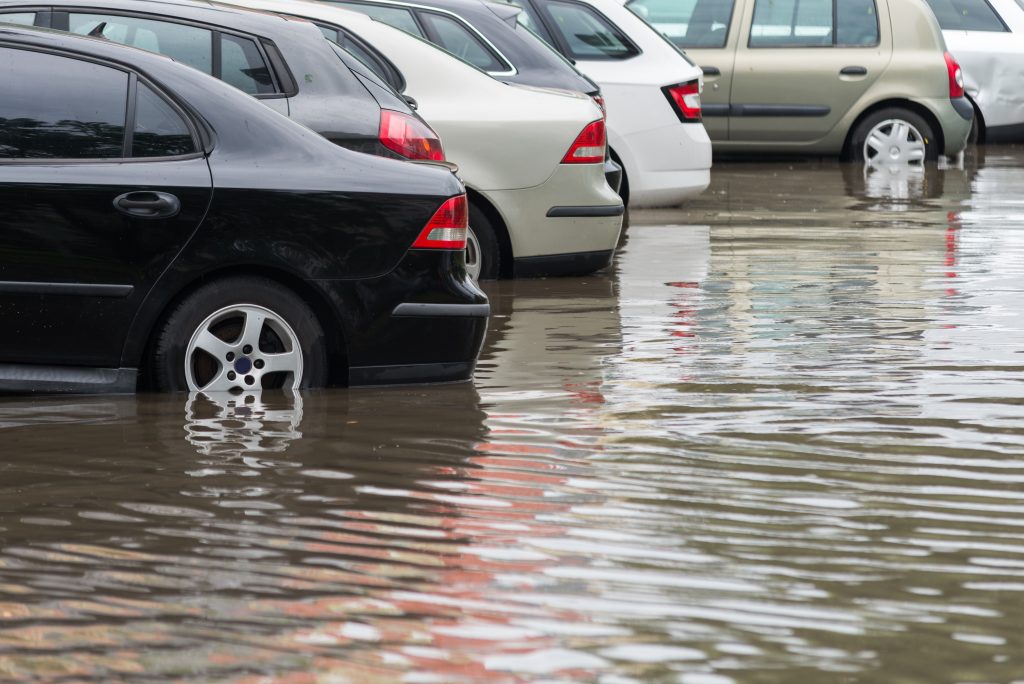
Hydroplaning is just one of the dangers of driving in heavy rains, as many Wisconsinites might have learned in 2018 when we experienced the “100-year flood” in which up to 20 inches of water was collected in certain areas. At Smart Motors in Madison, well over 100 flood damaged vehicles were towed in after the waters subsided to a navigable degree. Owners were hoping against hope their cars and trucks could be repaired.
Can Driving in the Rain Damage Your Car?
“Time and time again, we had to break the news to people that their car or truck was totaled,” says Jake Schaefer. “In fact, the totaled vehicles far outnumbered the ones that could be repaired.”
Schaefer says the majority of the totaled vehicles experienced water getting into the engine, which can cause irreversible damage. Schaefer says that unfortunately, there is no water-depth rule. He says that one need not drive through a 12” puddle to cause damage. Even in shallow water, all it takes is just the right splash to find its way into the engine and ruin the vehicle.
Driving in Heavy Rain: Safety Tips
Preventing water damage can be tricky and certainly not foolproof, but Schaefer says there are some measures drivers should take if there is a threat of flooding. “First of all,” he says, “If you don’t absolutely have to drive in flood-like conditions, don’t!” Also, remember the National Weather Service trademark phrase; “Turn Around. Don’t Drown.”
If there are flood warnings, the first consideration for a driver is to move the vehicle to a higher ground if that is an option. If this is not an option, Schafer says to leave the vehicle where it is.
If you are on the road during flood conditions, exercise extreme caution and a use a lot of common sense. Schaefer says if you can’t see the road because there’s so much standing water, don’t risk driving through it. “You can’t determine water depth without going in,” he says. “My suggestion is to pull over safely and observe other vehicles that may brave their way through the flooding.” Schaefer also warns that during a flood, there may no longer be any roadway under the water and you could drive into an impromptu river. If the water is over 12″ in depth, it could sweep a car away.
Schafer offers these additional helpful hints for driving in heavy rain conditions:
• If at all possible, wait to embark on your trip until the weather improves.
• Check your tires periodically and replace them if the tread is worn to a dangerously low level.
• Slow down.
• Do not use cruise control.
• Turn on your headlights. In some cases you might even want to turn on your hazards.
• Definitely use your windshield wipers. Replace them if they are damaged or worn.
• Maintain a safe distance from other vehicles.
• Avoid heavy or sudden braking.
• As mentioned above, be wary of standing water.
• If you’re hydroplaning, step off the gas and try not to brake.
• Ventilate your vehicle to prevent windows from fogging up.
Kibble 4 A Cause
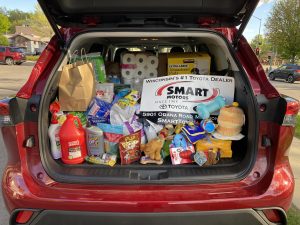
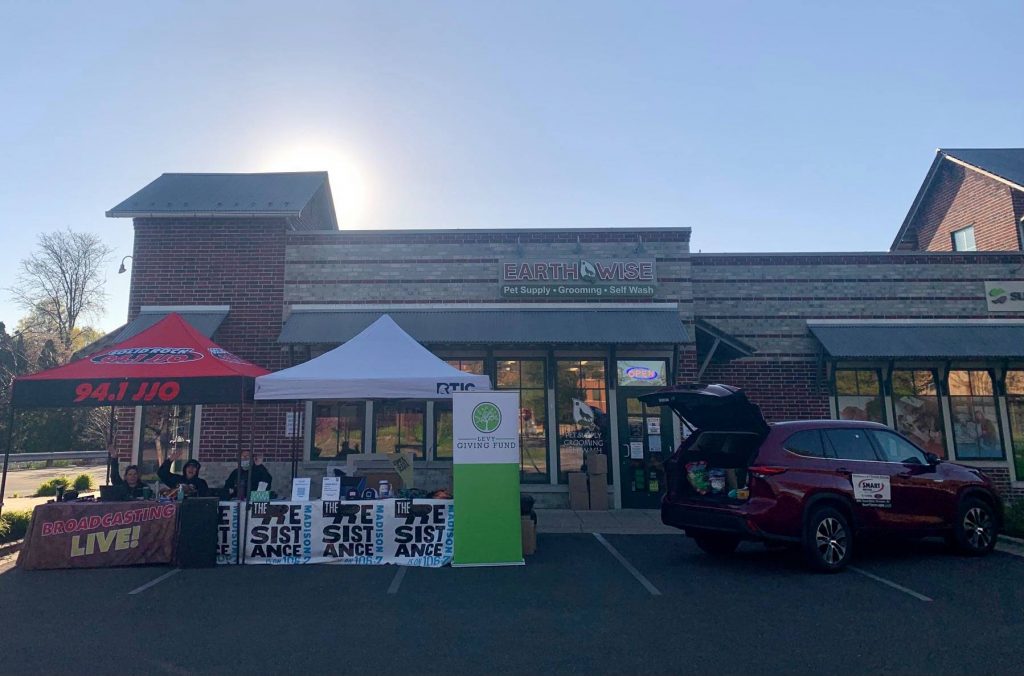
 In partnership with MidWest Family Broadcasting’s Solid Rock WJJO, The Resistance 106.7 and our friends at EarthWise Pet Madison we were able to raise over $4,000, 130 bags of dog food and we filled our 2021 Toyota Highlander to the brim with toys & goodies for our furry friends.
A huge thank you to everyone who came out to support our inaugural fundraising event for the Dane County Humane Society, Czar’s Promise, Fetch Wisconsin Rescue, Underdog Pet Rescue of Wisconsin and many more local organizations. A special thank you to the Levy Giving Fund and of course Karben4 for hosting a very special Yappy Hour ~ drinks for humans!

Fi Fi had a great time and says “Thanks!”
Back on the Diamond
Greater Madison Senior Softball league sponsored by Smart Motors
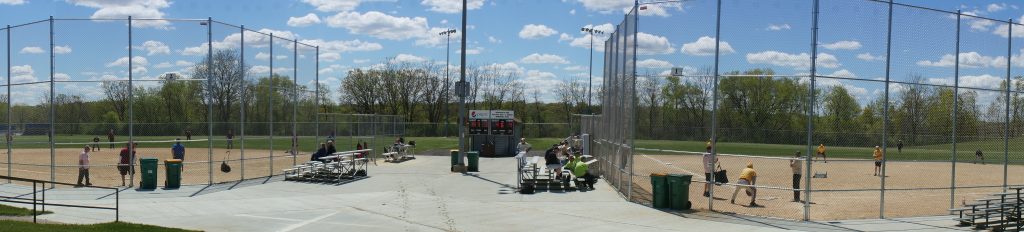
After being forced to take a year hiatus due to the COVID 19 pandemic, the Greater Madison Senior Softball league had their Opening Days in Verona, WI this past Wednesday & Thursday. Over 230 seniors play in the league and make up 23 different teams now in the 11th season for the local 55 and older league.

Opening Day: Blue sky, big fluffy white clouds and a couple hundred players, spouses and funs converged on Verona’s Hometown USA Community Park for opening day of the 11th season of the Greater Madison Senior Softball league. Players from throughout southern Wisconsin gather every Wednesday & Thursday to play ball, riminess, catch up on the latest chatter and just have a great time.

There are currently 23 teams playing across two days (Wednesday & Thursday) until mid-September. There are 4 different league levels so you can choose the league/division that best fits your skill level. If you’re interested in playing, contact league commissioner Ron Ramsden via the leagues website. Players come from all around Dane County, as well as Monroe, Blanchardville & Pecatonica.

Car Cleaning Tips | Bugs!

Keeping that Showroom Shine!
I remember as a kid my parents always had me washing the family vehicles weekly (or at least it seemed like it) during the summer. Sure, you could get a great tan, which was always a plus, but getting those pesky bugs removed from the hood, backside of the mirrors, around the headlights and grill was never easy. So, whether you send our kids out to wash your vehicle this summer, or you plan to do it yourself, here are are few tips to help make this a little easier for you;
Use a high-pressure washer or a hose with a good nozzle that can blast off those remains.
Soaking is important – for those larger bugs.
Sponge with meshing and microfiber cloths – you’ll need to put a little elbow grease into it, but in the end using a combination of sponge with meshing to remove the bugs and a microfiber to shine will make you the envy of the neighborhood.
Wax on. Wax off. Not only works for the karate kid, but will protect your vehicle’s exterior paint, while at the same time, save you time removing those bugs during the next washing.
Senior Softball Opening Day May 12th

“But there is no joy in Mudville—mighty Casey has struck out.”
Just like the conclusion of the famous poem “Casey at the Bat,” there was no joy in Verona in 2020 when the Greater Madison Senior Softball League (GMSS) struck out by being forced to forgo the season due to concerns about the spread of COVID-19. And since the league is only open to players 55 and older, the concerns were founded given that the virus is more dangerous and the symptoms are more severe in older adults.

“You just can’t keep these guys down,” says league commissioner Ron Ramsden. “Despite the disappointing lack of a season in 2020, they are optimistic and raring to play this year.”
The GMSS’s opening day is scheduled for May 12th with more than 215 players. Currently, there are 12 teams on Wednesday and 11 teams on Thursday, so receiving enough registrations to form an additional team on Thursday is their current goal. Even the lowest league games are still competitive, so new players should be able to play several positions since a team can only use a limited number of catchers and first basemen. The leagues official website. Games are played at Verona Community Park on Wednesday & Thursday mornings starting at 9:30 a.m. GMSS has been sponsored by Smart Motors since it started in 2010.

“Even though most of the guys will be inoculated by opening day, we couldn’t ignore the virus altogether,” says Ramsden. “We have put COVID safety measures in place to help insure the players stay healthy all season.”
These measures include all players being required to have hand sanitizer with them and to use it frequently. Also, safe distancing is to be maintained by all players not on the playing field and will be maintained by the umpire, catcher, and batter. It is recommended that the umpire and catcher wear mouth/nose coverings on the field. Batters should also wear a mask so long as it doesn’t interfere with safety (i.e. causing glasses to fog up, obstructing vision, etc.).
“We realize that the safety measures will make game play a little less interactive than we’re used to,” says Ramsden. “But all of our players have signed off on the rules without hesitation. A little inconvenience is worth it to be able to play and try to get back to a normal life.”
Ramsden says every year he is inspired by the growing roster of players who have had their fair share of battles with various physical ailments. But, he adds, the guys play ball like they’ve never had a medical condition in their lives.

“These guys have battled cancer and heart attacks, diabetes, knee and hip replacements, and, yes, even COVID,” he says. “To most people, after events like that, they might hang it up. Not in the GMSS. The love of the game drives them and they are impressive.”
The Greater Madison Senior Softball League was started in 2010 by childhood friends Ray Blum and Bob Ruhland. It has since grown from eight teams to 23 teams and added a second game day. GMSS is open to men 55 years and older. Individual registrations to form an additional Thursday team are now being accepted. Regular league games will take place every Wednesday and Thursday morning at 9:30 a.m. and 10:45 starting May 12th and going through August at the Verona Community Park at 451 E. Verona Avenue. For more information, check out the league’s website and please take a few minutes to review the GMSS COVID safety measures.
April – National Car Care Month
April is National Car Care Month: Time to Make Auto Care a Top Priority
Cars, just like humans, need an annual checkup, and there’s no better time than during National Car Care Month.
National Car Care Month aims to get cars healthy and running in top shape as millions of Americans head out on summer road trips. Some simple checkups can increase gas mileage and add to the lifetime of a vehicle.
“Car Care Month is just a really good time to make sure your car is running its best,” says Jake Schaefer, Service Director at Smart Motors. “A car is an investment and paying attention in taking proper care of it is much better than paying thousands of dollars to replace it later.”
Schaefer cites several common trouble areas as spots to pay attention to during Car Care Month and any other time of the year. Tires, filters, oil, interior, and exterior.
“The great part about these is just about anyone can perform these functions at home—specialized tools aren’t really necessary,” says Schaefer.
Tires
When tires are not correctly inflated, they just don’t perform properly. With a simple tire gauge that costs under $10, people can see if tires are at the manufacturer’s suggested level. The vehicle suggested inflation level is usually found on a sticker inside the driver’s side door or the glovebox or in the owner’s manual.
And it is good to be at the proper level. For every three PSI (Pounds per Square Inch) below that level a car tire loses, it becomes one percent less efficient and wears 10 percent faster. These numbers add up cumulatively, so if a car is 10 PSI under, that’s over three percent of wasted fuel every time someone gets behind the wheel. If someone doesn’t want to get a tire gauge, just keep in mind, looks aren’t deceiving. If the tire looks low, it is most likely low.
Filters
The vast majority of vehicles have internal combustion engines. And the science behind combustion requires both a fuel source and air. If this air isn’t clean, it will hamper the combustion process, which is why cars have engine air filters. However, if these filters are dirty, they will let these impurities through and decrease efficiency by up to seven percent.
To check the air filter, look in the owner’s manual and find out where the filter is located. Then pop open the hood and remove the filter. Hold it up to the sun; if light streams through, the filter is good. If not, drop it on the ground several times and retest. If sunlight is still not visible, a new filter is required.
Oil Changes
Everyone knows cars need oil changes, but why? The purpose of oil in a car engine is to keep all internal parts lubricated and running smoothly. As oil ages or gets used, it breaks down and its lubricating properties diminish. An oil change replaces the dirty oil and allows parts to be freshly lubricated with new oil.
Almost all models of cars include an engine oil dipstick to allow people to check the vehicles engine oil level. Locate the dipstick, pull it out, and place it back in the engine, ensuring it goes all the way down. Pull it out, and without changing the orientation, see where the oily part meets the dry part, if it’s between the two marks on the stick, the oil level is good.
Exterior
A winter season full of salt and sand can do a number on the exterior and can even lead to rusting. As temperatures rise, it’s advised to visit a good car wash, one that gets all of the random debris not only off the car, but from underneath the car as well. Waxing a car helps the exterior paint last longer and shine. Instead of applying one heavy coat of wax, apply several thin coats, after the previous coat has cured. This technique will bring out the vehicles best color and depth.
Interior
A good thorough cleaning of carpet and upholstery will remove stains, and winter’s tracked in salty residue. This will leave the car clean and smelling fresh. A word of caution when cleaning windows, do not use a glass cleaner to clean the rear window, as this can cause damage to the rear window defogger heater wires.
Smart Motors Used Cars | CarFax Top-Rated Dealer
Verified Customer Ratings Used to Name Second Annual CARFAX Top-Rated Dealer in U.S.
Smart Motors Used Cars has been honored in the second annual CARFAX Top-Rated Dealer Program.
As a 2020 CARFAX Top-Rated dealer, Smart received an average of 4.6 stars out of a possible five stars. According to CARFAX officials, only a select group of dealers are being celebrated for their commitment to building consumer confidence through exceptional service and customer care.
“CARFAX has more than 2.2 million verified customer ratings and reviews for dealerships around the country,” said Bill Eager, CARFAX Vice President of Dealer Business. “The Top-Rated Dealer designation recognizes the best of the best for exceptional service and customer care.”
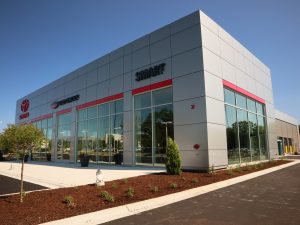
Smart Motors Used Cars – 5710 Odana Road Madison WI
Since opening their new Used Vehicle facility in mid-2018, Smart Motors Used Cars has upped their vehicle selection and sales volume, while at the same time, revving up their customer experience and overall customer satisfaction to a whole new level. “Commitment to quality, customer satisfaction and continuous improvement are our core values” said Justin Jackson, Sales Director at Smart Motors. “Earning this recognition from our customers is truly what we strive to accomplish every day.”

Customers “Bang the Gong” when picking up their new vehicle.
Whether you’re looking for a one-owner Used vehicle, Toyota Certified Used Vehicle, a quality Used Vehicle under $15k, or want to sell your vehicle; the team at Smart Motors Used Cars can help.
You can look for Smart Motors Used Cars 2020 CARFAX Top-Rated Dealer badge on the CARFAX Vehicle History Reports they provide customers.
Certified Collision Repair. Why it Matters

The standard of quality you expect.
It is never easy when you’re involved in an accident, and the last thing you want to worry about is if the body shop you choose to repair your vehicle will do a quality job. How can you ensure not only the quality of collision repair, but be assure the equipment, parts and technicians working on your vehicle are qualified professionals? Simple. Certification.
As a Toyota Certified Collision Center, Ball Body Shop – a division of Smart Motors, takes the risk out of collision repair through the rigorous Toyota certification process and on-going continuing education, equipment specifications, parts requirements, and continuous customer experience monitoring.
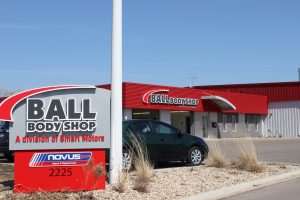
Ball Body Shop | 2225 Eagle Drive, Middleton, WI | 608.831.5944
“It’s our commitment to excellence in collision repair professionalism, repair quality and customer satisfaction”, says Ball Body Shop manager James Anderberg. “Our staff is uniquely qualified to get the job done right, while at the same time, putting our customers at ease during what can be a stressful time for them.”
Benefits of choosing a Toyota Certified Collision Center for your vehicle’s repairs are abundant and include:
– Toyota Certified Technicians.
– Toyota Certified Management team provides the knowledge and expertise to answer your question quickly, accurately and will help navigate the insurance process (if needed) so you and your vehicle are back on the road as quickly as possible.
– State-of-the-art tools & equipment used to restore your vehicle to the original manufacturer specifications.
– Genuine Toyota Parts.
– Third-party customer service monitoring is used to ensure your experience is exceptional.
You have the right to choose the body shop you want to repair your vehicle and choosing a Toyota Certified Collision Center is the easy choice.
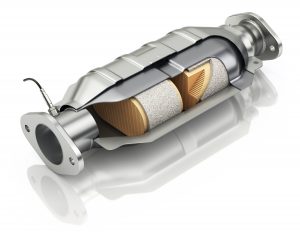
Cross section of a catalytic converter
It may sound odd, but there is a strange crime wave happening across the country. Catalytic converters, which help reduce an automobile’s emission pollution, are being stolen out from under our very noses…and cars.
Catalytic Converter Theft
Nationwide, police are reporting a surge in cases. In St. Louis, catalytic converter thefts jumped more than eightfold, from 50 in 2019 to 420 last year. In Lexington, S.C., sheriffs’ deputies responded to 144 catalytic converter thefts between July and December, triple the number of cases over the year-earlier period.
In Wisconsin, West Allis police finally nabbed one thief just last month, while statewide hundreds of the converters were reported stolen in 2020 and the trend isn’t slowing down.
Why Are Catalytic Converters Stolen?
So why is this specific car part being targeted? Because each catalytic converter contains metals that are more precious than gold. And it only takes a saw and three minutes to poach one.
Catalytic converters are made with palladium and rhodium. The price of palladium hit a record of $2,875 an ounce last year Rhodium prices have skyrocketed to a record $21,900 an ounce this year, roughly 12 times the price of gold.
After the thief cuts away a converter, he/she takes it to a recycler and earns roughly $120 per unit. The victim of the theft is left paying an estimated $1,200 for a replacement.
Toyota Prius Catalytic Converter Theft
“Priuses are often targeted,” says Jake Schafer, service director at Smart Motors in Madison. “It’s probably due to the fact a Prius’ converter contains more precious metals than what is installed in most vehicles. When all is said and done, though, it can cost the victim upwards $2,500 to have a Prius converter replaced.”
Schafer says the dealership is currently replacing dozens of catalytic converters each month due to theft, but Smart Motors is being proactive by working with a manufacturer that supplies anti-theft protection.
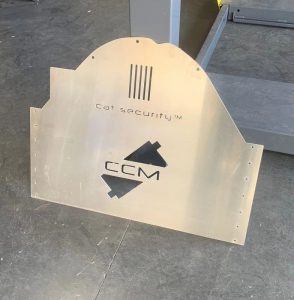
Cat Shield
How to Prevent Catalytic Converter Theft: Anti-Theft Shield
“We’ve invested in a catalytic converter protection system with Cat Security,” he says. “We will professionally install their ‘Cat Shield,’ which is a sturdy aluminum plate that provides a barrier against theft.”
According to the Cat Security, there are four main reasons to have an anti-theft plate installed:
- Save on the potential loss of time and money.
- Put your mind at ease knowing your car is protected.
- Help put thieves out of business.
- Improve your vehicle’s underbody aerodynamics (the plate may actually help improve fuel mileage).
Catalytic Converter Anti-Theft Shield Cost
“The plate usually costs a few hundred dollars with installation,” says Schafer, “but it’s a small price to pay for protecting yourself from inconvenience and perhaps thousands of dollars if you fall victim to this very prevalent crime.”
Rising Gas Prices. Time to Upgrade Your Vehicle?
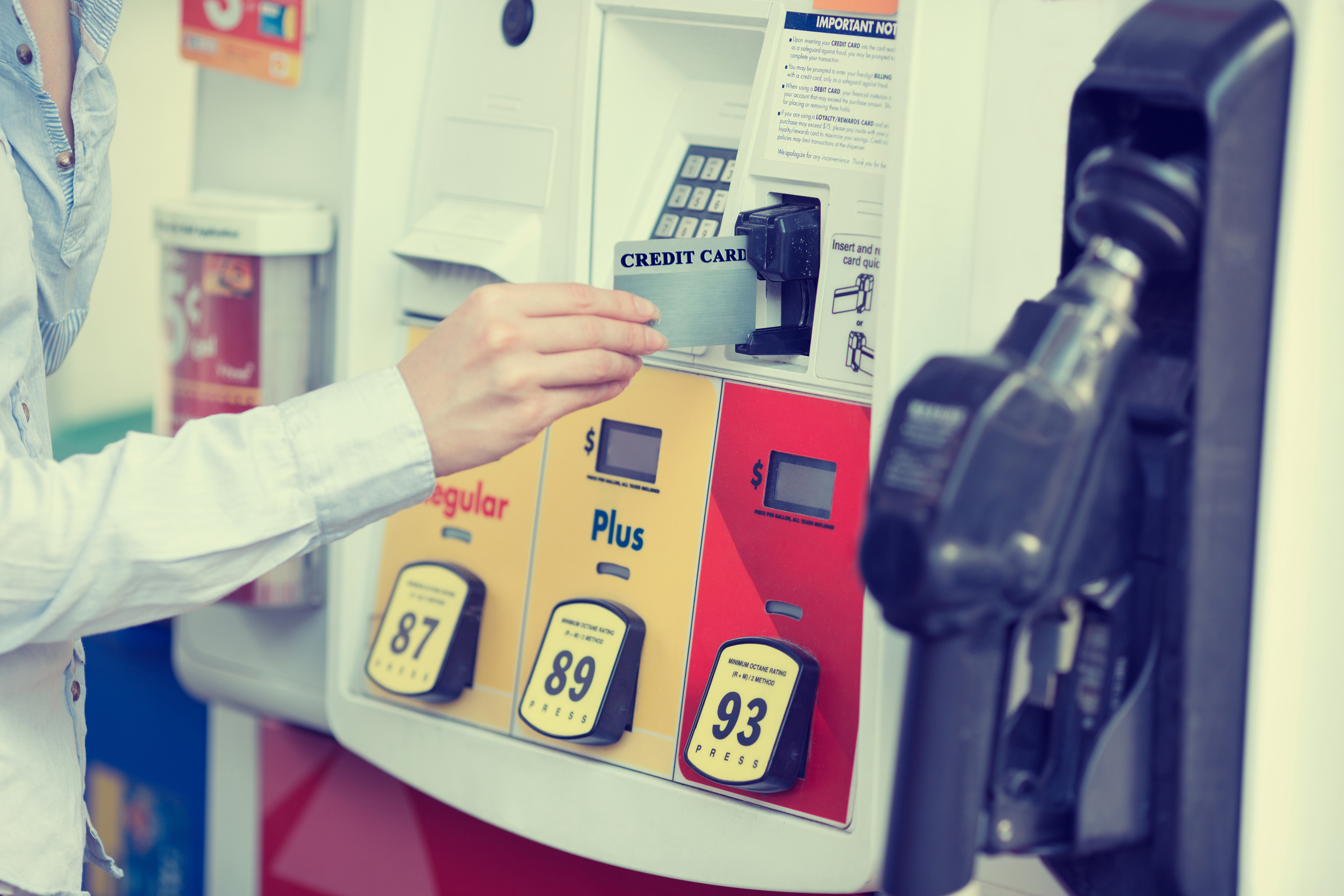
Safety and fuel efficiency make owning a new vehicle very attractive.
If you currently own a gas-powered vehicle you know fuel prices change as often as Wisconsin’s weather. You also know there seems to be a consistent “coincidence” between heavy travel times like Memorial Day, Labor Day and Thanksgiving and a surge of prices at the pump.
The Covid-19 pandemic has fueled a steady rise in gas prices due to logjams created in the global supply chain. The pandemic has also made travel by car the healthiest way to get from point A to point B. And as more Americans become vaccinated, many more people will undoubtedly embark on road trips to destinations far away from the home they’ve holed up in for months.
What vacationers and commuters alike should know, though, is that purchasing a new vehicle may be worth the money. “With the steady increase in gas prices we are seeing an uptick in sedans and hybrid sales,” says Justin Jackson, sales director at Smart Toyota. “We are typically a big hybrid dealer, but we are seeing a bigger increase and we can only believe has prices have a lot to do with it.” New cars, trucks and SUVs are more fuel-efficient than vehicles manufactured just a few years ago, and they come with many more safety features.
“A new vehicle can save a driver an average of $1,502 ($2249-$747) per year in gas,” says Jackson. “That means, on average, $125 saved per month that could be used toward the vehicle’s monthly payment.”
BREAKING IT DOWN: (Based on the average American who drives 15,000 miles per year)
New Hybrid Vehicle at 54 mpg vs. Older Vehicle at 18 mpg
15,000 divided by 54 = 277 15,000 divided by 18 = 833
Uses 277 gallons of gas per year Uses 833 gallons of gas per year
277 x $2.70 = $747 per yr. in gas 833 x $2.70 = $2249 per yr. in gas
“The savings are even greater if you move into a hybrid electric vehicle,” says Jackson.
Jackson says the dealership has seen first-hand how hybrids have grown in popularity. More recently, with the release of the Prius Prime, which has an estimated 54MPG, and 133MPGe, rebirth of the Toyota Venza hybrid and now including the Toyota Sienna (mini-van) hybrid, local consumers are showing a renewed interest in hybrid vehicles. Today, Smart Motors is one of the top Toyota hybrid dealers in the United States.
“Saving money on fuel makes a new car worth it, but there are a number of other good reasons like safety features that make upgrading beneficial,” says Jackson. He lists Toyota’s offering of
- Pre-Collision Systems with Pedestrian Detection
- Dynamic Radar Cruise Control
- Lane Departure Alert, and
- Road Sign Assist as a few examples of technologically advanced features that go beyond anti-lock brakes and air bags.
Easy Tips to Save Money on Gas:
- Download apps like GetUpside that partner with gas stations nationwide to offer discounts to users.
- Use a gas station credit card and/or enlist in their rewards program.
- Don’t use premium if your car calls for regular.
- Wholesale clubs offer discounted fuel to members.
- Refuel before your gauge gets too low.
- Downsize the fuel bill by driving a smaller or more fuel-efficient vehicle.
- Driving faster than the posted speed limit burns more fuel and increases trips to the pump.
- Take some time to empty the trunk, clean out the back seat and remove the luggage rack. The lighter the vehicle, the better the fuel efficiency and the more money you save on gas.
- “Jack-rabbit” starts and hard braking increase fuel usage by as much as 40 percent.
- Check your tires regularly; under-inflated tires increase resistance and fuel consumption by up to six percent.
- Consolidate trips and errands to cut down on driving time can eliminate hundreds of miles – and dozens of gallons of gas.
Connect with us
